CURRENT MISSION: Conclude the 2026 soyjak.party hack page, aswell as any pages relating to it, such as the Summer 2026 Crisis page.
Update Quotecord with any relevant info. See the blackboard for more info.
ESL: Difference between revisions
No edit summary |
made it more ESL o algo |
||
| Line 20: | Line 20: | ||
* Order of word: Order of word in english is different from a lot of other language, so ESL talker struggle very much with putting the correct form to a correct words to form a sentece that has good gramatics. | * Order of word: Order of word in english is different from a lot of other language, so ESL talker struggle very much with putting the correct form to a correct words to form a sentece that has good gramatics. | ||
* Verb tense: When ESL talker speaks He have trouble using the verb like when uses irregular verb or verb form that, in their first linguage, are different. | * Verb tense: When ESL talker speaks He have trouble using the verb like when uses irregular verb or verb form that, in their first linguage, are different. | ||
* Subject-verb agreement: ESL learners may | * Subject-verb agreement: ESL learners may struggling with correct matching the subject of the sentence with appropriate verb forming. | ||
*Pronoun usage: ESL learners may use the wrong pronoun (such as "I" instead of "me") or omit pronouns altogether. | *Pronoun usage: ESL learners may use the wrong pronoun (such as "I" instead of "me") or omit her pronouns altogether. | ||
* Articles: ESL learners may have trouble using "a," "an," and "the" correctly, especially since some languages do not have articles. | * Articles: ESL learners may have a trouble using "a," "an," and "the" correctly, especially since some languages do not have articles. | ||
* Prepositions: When ESL learner talk they probably use the preposition that is wrong, or use a preposition when they don't need it. | * Prepositions: When ESL learner talk they probably use the preposition that is wrong, or use a preposition when they don't need it. | ||
* Plural and possessive forms: ESL | * Plural and possessive forms: ESL learner may have troubles forming plural and possessives, especially with irregulars noun. | ||
* Adjective and adverb placement: ESL learners may | * Adjective and adverb placement: ESL learners may adjectives and adverbs placed in the wrong sentence position. | ||
* False cognates: ESL learners may | * False cognates: ESL learners may confines words that look similar in their first language and in English, but have different meanings. | ||
* Idioms and Slang: A ESL find difficult to learn slang because when they are said their meanings are depend on | * Idioms and Slang: A ESL find difficult to learn slang because when they are said their meanings are depend on contexting and in most times do not have direct translation in the original languge | ||
* Saying: "Sorry for my bad english. English is not my first language" | * Saying: "Sorry for my bad english. English is not my first language" | ||
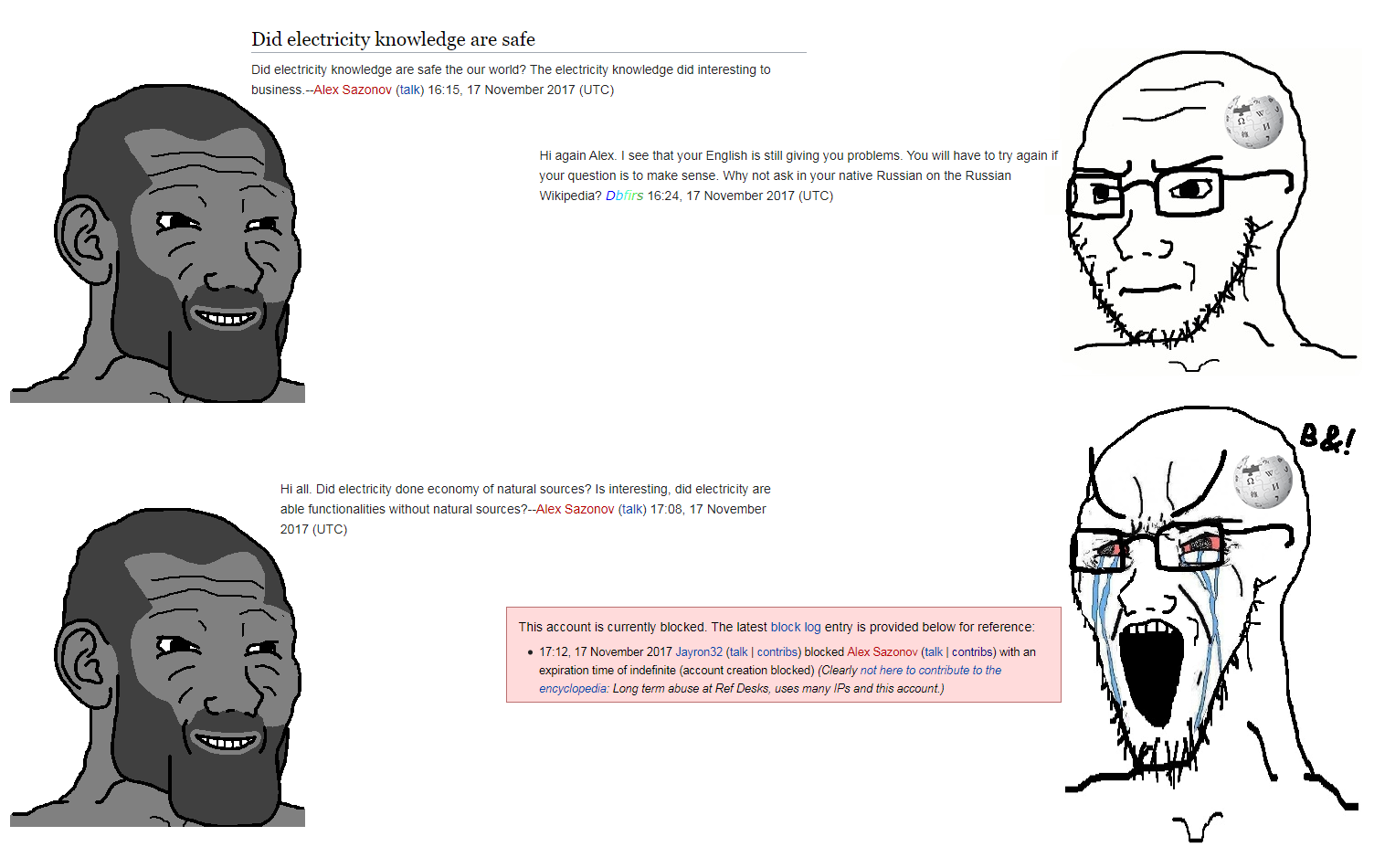
* They often use Google Translate to write in English | * They often use Google Translate to write in English | ||
Revision as of 02:07, 5 October 2024
 |
This page was written by Google Translate... |


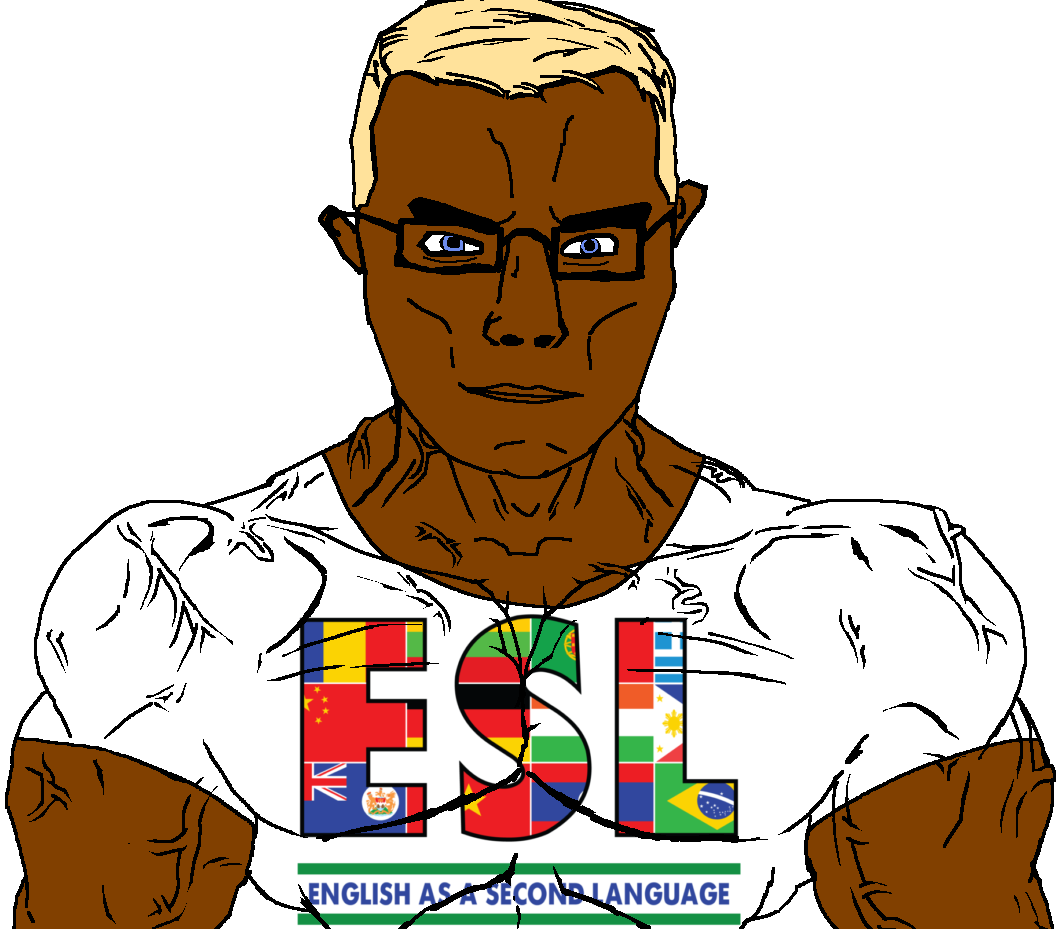
ESL, or English are Second Language, is using of the English by the speak not first language English. ESL is commonly pointed out by an reader when he detect it.
When you Write like ESL speech, specially word who are from certain language and cultures like of Indian, is a form of the bait , because Unite Statians can't hold from show how wrong type and derailling the thread
Normal Things of ESL
- Order of word: Order of word in english is different from a lot of other language, so ESL talker struggle very much with putting the correct form to a correct words to form a sentece that has good gramatics.
- Verb tense: When ESL talker speaks He have trouble using the verb like when uses irregular verb or verb form that, in their first linguage, are different.
- Subject-verb agreement: ESL learners may struggling with correct matching the subject of the sentence with appropriate verb forming.
- Pronoun usage: ESL learners may use the wrong pronoun (such as "I" instead of "me") or omit her pronouns altogether.
- Articles: ESL learners may have a trouble using "a," "an," and "the" correctly, especially since some languages do not have articles.
- Prepositions: When ESL learner talk they probably use the preposition that is wrong, or use a preposition when they don't need it.
- Plural and possessive forms: ESL learner may have troubles forming plural and possessives, especially with irregulars noun.
- Adjective and adverb placement: ESL learners may adjectives and adverbs placed in the wrong sentence position.
- False cognates: ESL learners may confines words that look similar in their first language and in English, but have different meanings.
- Idioms and Slang: A ESL find difficult to learn slang because when they are said their meanings are depend on contexting and in most times do not have direct translation in the original languge
- Saying: "Sorry for my bad english. English is not my first language"
- They often use Google Translate to write in English
| ESL Are is part in other series within |
| Lenguage and dielact |
|---|
 |
The speak in of the soy[+] |
Phasers[+] |
Coffee and are pastings[+] List of copypastas / 2 ♦ Billy Mays ♦ Did Vaush just BTFO? ♦ Seething kike ♦ TND ♦ YWNBAW |
Miss allanie us[+] |