Exercise


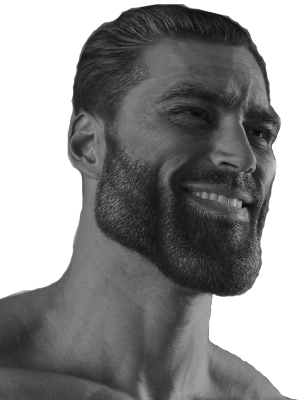
Building muscle mass is one way to keep yourself healthy, strong, and highly aryan. The methods on this page can help you achieve that and become a gigachad instead of what Nikocado Avocado used to be.
Things to know first
[edit | edit source]Nutrition
[edit | edit source]- Food - Food is the first and foremost factor in muscle building. Eating the right food for your body is crucial. You need to consume enough calories to support your exercise routine. It is best to have a calorie surplus in order to maximize the muscle building, generally 200-300 calories above your maintenance. You can calculate your calories with this TDEE calculator: https://tdeecalculator.net/
- Recomp - You can build muscle in a calorie deficit, especially when you're above 20% body fat, and untrained. Create a calorie deficit where you would lose a bit less than 0.5% of body mass per week, and eat 1g of protein per 1cm of your height.
- Fat - Consuming fat is not bad, but they should come mostly from healthy fats. Healthy fats can be found in oily fish, avocados, seeds, nuts, and olive oil. These fats help in producing male hormones that also aid in muscle building. "Unhealthy fats" found in animal lard, milk and refined seed oils are not bad for you, but RFK's administration recommends limiting them to no more than 10% of your total calorie consumption.
- Carbs - Contrary to popular belief, carbs are not bad for you. Carbs are fuel for muscles during workout. They support endurance and aid recovery. Most of your carbs should come from starchy food, like: Rice, potatoes, oatmeal and bread. Sugar is not a very good source of carbs, since it's 50% Glucose and 50% Fructose, and Fructose is an inferior source of energy compared to Glucose, while Starch is 100% Glucose. It's also a good idea to eat a couple pieces of bread or a serving of rice about 30 minutes before workout for the best results.
- Protein - Protein is the most important macro-nutrient in muscle building. It is responsible for muscle growth and recovery. You should eat 1.6g of protein per kg of your lean body mass (or 0.7g per pound for Americans). Good protein sources are: Chicken, Fish, Beef, Pork, bugs, soylent, beans, lentils and split peas.
Recovery
[edit | edit source]Recovery is just as important as exercise, without proper recovery you will not have any gains.
- Sleep - Sleep is the most important part of recovery. Insufficient sleep is a reason why many people fail to build muscle, since most of your growth hormone is synthesized during sleep, insufficient sleep also decreases your testosterone. Aim for 8-10 hours of sleep. Make your bedroom optimal for sleeping by having it as dark as possible by using a sleep mask (or have blackout curtains if you're a rich nigga), have it be cool (around 65-70 Fahrenheit), avoid bright blue light, and have it be quiet.
- Food - Eat enough mostly whole foods that fits your macros for the best recovery.
- Stress - don't freak out over Minor inconveniences or your ability to recover will worsen.
Expectations
[edit | edit source]No, you will not transform into a gigachad bodybuilder on your first few weeks of exercise, even if you follow every step correctly. It is important to understand how progress should look like in order to prevent demotivation or to think that you are doing something wrong. Assuming a normal body fat percentage (less than 24%), with considerable effort on hypertrophy training and adequate food/recovery, you can expect these changes:
- Months 1-3 - You should not expect much muscle definition during this phase. You will grow slightly larger, have better posture and overall feel firmer, but it is not enough to have easily noticeable muscles.
- Months 4-6 - You will begin noticing muscle separations in your body, with faint abs and such becoming more and more visible as you exercise. Despite becoming stronger, you will still have only an average to above average physique.
- Months 7-12 - At this point, you will become significantly more athletic compared to your body before workouts. You will most likely have good definition even while not flexing, granted you did everything correctly.
- After a year - Now that you have finished the hard part, it is your choice to continue becoming stronger and larger with progressive overload or to simply maintain your current body. As you exercise more and more, you will not really hit your limit until 2-3 additional years after.
Please note that this list is incredibly variable based on body fat percentage, BMI, workout quality and genetics. The only important thing to consider is muscle definition if you have a very high body fat percentage (e.g. more than 27% for men). You will definitely gain muscle mass, but if you do not do anything about your fat then it is very unlikely you will have muscle definition. With caloric deficits, cardio, and other programs, you will be able to shave off fat while at the same time building muscle.
Cost
[edit | edit source]An immediate shift to exercise can be expensive. Things like gym subscriptions, at-home equipment, supplements, and especially healthy food can quickly rack up costs and make it difficult for you to exercise effectively. If you happen to be unfortunate and cannot financially sustain your workout journey, there are some things you can do:
- Calisthenics - Calisthenics is a form of strength training where instead of using external weights for training, you utilize your only body weight for muscle gains. Think of things like push-ups and pull-ups, they use your own body as weights. There are free or very cheap mobile apps you can download that create workout plans for you.
- Home equipment - Despite calisthenics being effective, progressive overload and overall workout variety will be limited. It would be a good idea to purchase 1-3 pairs of dumbbells or barbells as these will significantly increase the type of workouts you do.[Best to buy equipment used if you want to save money and have a nice home gym]
- Healthy food - Shifting from junk food to healthy food is not very easy as healthy food is significantly more expensive due to its perishability and storage costs. Please try your best to strategically conserve your money for healthy foods whilst also completely avoiding unhealthy foods. It is also important to note that under no circumstance should you stop eating entirely just to only eat healthy. If you cannot sustain your diet to reach your caloric target, then you should mix cheap meals into it. Use nutrition apps to pay attention to your macros.
- Buy basic stuff like chicken, eggs, ground beef, white fish (if local), potatoes, rice, etc. Buy in bulk when possible. If you have at least some job, it shouldn't be a problem. In fact, this might be even cheaper than your previous diet. You can also grow your own food, if you want.
Exercise
[edit | edit source]Now for the exercise itself. This article focuses on muscle growth therefore Resistance Training.
Hypertrophy
[edit | edit source]Resistance training, also known as Strength training, is a type of exercise that builds strength, increases muscle mass, and makes you aryan. Many gigas do resistance training, that's why they look like that. The most important part of resistance training is Mechanical Tension and Progressive overload.
- Mechanical Tension - Its name says it's all. It's pressure applied to your muscles from the weight. Peak of the Mechanical Tension is muscular failure - a point where your muscles physically cannot perform another repetition, no matter how hard you try. You should always aim to achieve failure but as a beginner, you can aim for 2-3 reps before failure and have great results.
- Progressive Overload - Increase in strength. It manifests by being able to do more repetitions or lift heavier weights (eg. After a week of exercise, you add 5 pounds to your bench press).
Frequency of workouts, sets, and reps
[edit | edit source]You don't need to exercise 7 times a week for 8 hours straight, in fact, just 2 workouts per week, about 15 minutes each can give you great results in terms of muscle hypertrophy.
- Frequency of workouts - You should exercise at least twice a week. You can do more if you want to, but exercising more than 4 times a week won't let a beginner like (You) to recover properly.
- Number of sets - 4-6 sets on a muscle group per week is enough for a huge muscle growth for beginners. As you become more experienced you should do somewhere between 10-20 sets on a muscle group per week
- Number of reps - It doesn't matter that much, but if you can easily do more than 20-30 repetitions per set it's considered junk volume and you should add weights or make the exercise technique more difficult. This is especially important for Calisthenics🗝️
- Since you can’t add weight in calisthenics, just change something about the movement to make it harder.
Programs
[edit | edit source]There are tons of different workout programs and splits. As a beginner you should focus more on compound exercises with low frequency of workouts. The Full Body split works the best for this, but as you get experienced you can figure out your own split. Don’t bother with anything that isn’t full body, upper/lower or push/pull/legs, endless optimization grants diminishing returns. Note that some muscles are small and don't require tons of training, like biceps, chest or triceps, and just a single exercise is usually enough for them so dedicating an entire day to these small muscles is retarded. Just pick a program and stick to it, and NEVER rely purely on motivation to work out. If you drag your ass to the gym after every shitty day for months on end, you will be ahead of basically everybody else that works out. Treat the gym like personal hygiene/chore instead of like a hobby, similar to how doing the dishes or brushing your teeth is uninteresting yet incredibly important. It will eventually become second nature to you.
Start working out as soon as possible, btw. As soon as you get visible muscle or a respectable bench pr, you will become and feel like an objectively better person. You can also do sports if the gym isn’t really your thing.
Beginner
[edit | edit source]As a beginner you should focus on compound exercises. If you have no time and no gym, just push ups, pullups and squats are pretty good enough to make a good physique, but if you can access gym equipment you can build an even better physique. This following full body workout is pretty good for beginners, try to do it twice a week so you can recover properly.
- Horizontal push - Barbell/dumbbell bench press. It's mostly a chest exercise. Dumbbells are better for targetting the chest specifically, while barbell is more compound and involves triceps pretty heavily. Incline version of both gets your upper pectoral muscle much more than the flat-bench versions.
- Vertical push - Barbell/Dumbbell overhead press - They will target your shoulder and most of the arm muscles. It's more of a tradition to do these since these are mostly the front delt exercises, which already get trained by bench-press. You're better of doing some sort of rowing movement and a lateral raise since none of these movements get trapezius muscles working and rows will also use your rear delt.
- Vertical pull - Lat pulldowns or some other variation of a back exercise, but if you aren't a fatass you should do pullups, since they are simply better. These exercises will grow your lats and stimulate other muscles involved with pulling the shoulder blades together, like the traps/trapezius muscles .
- Deadlift - Any sort of deadlift movement ranging from the classic, stiff-legged, romanian and others. They grow hamstrings, glutes and lower back. It is more of a lower body exercise but many people think it's a back movement for some reason.
- Squat - You may want to do body-weight squats till failure as (You) cannot afford a gym membership. If you want more intensity (and have access), use a barbell. You can also do leg presses if you have spinal issues.
You can also try a thing called superset - where you do an exercise right after finishing the other one, without a rest, and these exercises should have completely different muscles used. For example you can superset leg extensions and hip abductions in case if you can't do squats, since these exercises are very isolational. After a couple of months you will see that some muscles are not as developed as others, and you can add a couple of isolational exercises to this list.
It's important to have a variety of exercises, since each compound lift is going go target slightly different muscles, like different grip pullups, presses. Incline DB press, regular DB press and bench press are each going to target muscles in a different way. Incline DB press will use mostly your upper chest, and slightly triceps, regular DB press will use mostly all of the chest an slightly triceps, and traditional bench press is going to have both similar tricep and chest activation.
Intermediate
[edit | edit source]You can try higher volume programs since your ability to recover improves. Popular choices amongst Intermediates are PPL (push pull legs) and Layne Norton's PHAT program which is basically a 5 day upper/lower combined with push/pull/legs. Also, you can stop training to failure all the time, since from a year or two of training you should be able to fully understand what failure is. You can stop at 2-3 reps before failure and you will have just as good results, without that much fatigue.
Experienced
[edit | edit source]If you are experienced, you probably won't grow any more muscle, the best you can expect is maybe a kilo or two in a YEAR. You can either switch to powerlifting, or maintaining your physique, since the only thing that grow after this point is strength. THOUGH if you haven't properly grew some of your muscles, (like calves or shoulders for example) they will grow just as fast as if you were a beginner.