Anarcho-capitalism


Anarcho-capitalism (AnCap), also known as is a right-libertarian political philosophy advocating the abolition of the state in favour of absolute private property and voluntary association. Anarcho-capitalism is the exact opposite of marxism-leninism.
Anarcho-capitalists take the Non-Aggression Principle to the extreme and dismiss any form of the state, since they believe that the state is an inherently coercive entity, and believe that all functions of the state should be provided voluntarily by private individuals.
In other words:


They also have vaporwave aesthetics for some reason.
Core principles
[edit | edit source]Despite the approximately 400 different varieties of libertarian who will immediately explain why every other libertarian is a statist, most anarcho-capitalists share several principles.
Self ownership
[edit | edit source](You) own yourself. This is self-evident, but for some reason leftists and many conservatives somehow disagree on it even though the act of them arguing is THE process of them expressing self ownership, as no one else has made them argue. You can learn more about from this video by TaxedBrass - BASED-ic Economics: Who Owns YOU?.
The only argument coming from the leftists is that "self ownership is le bad because it enables captalsm" or "le morality is subjective" where both do not disprove the original point.
Private property
[edit | edit source]Private property is the logical conclusion from self ownership. If you own yourself, you own your thoughts (IP), your body (prostitution), and your labour. Ancaps believe that private property is created by either taking something unowned, or by exchanging something that was previously owned.
Once property has been legitimately acquired, taking or using it without the owner's consent constitutes aggression.
The Non-Aggression Principle
[edit | edit source]The Non-Aggression Principle (NAP) is literally what it means. It rejects the initiation of aggression, where aggression is also the common-sense definition: physical violence to the person or property.
Importantly, the NAP prohibits the initiation of force, rather than force itself. Self-defense against aggression can therefore be justified. There's a lot of shitflinging over whether pollution, intellectual property, abortion, banning street racing or narcotics constitutes aggression. Most generally agree if you consent to certain rules, it is not aggression (with exception of murder), which is the main issue with taxation and state mandated laws, since the consent is implied.

Rejection of the social contract
[edit | edit source]Ancaps reject the idea of a social contract where the consent is implied. The main argument is: >Social contract? But I didn't sign shit!. This is the main difference between ancaps and classical liberals and any other statist ideologies.
Voluntary exchange
[edit | edit source]Anarcho-capitalists believe interactions should generally occur through consent rather than coercion. It constitutes that all forms of involuntary exchange, such as taxes or tariffs, are theft and an initiation of aggression.
Free market
[edit | edit source]Free markets are the logical conclusion from voluntary exchange.
Free markets are whole lotta other thing to which pretty much all of the right-libertarian theory was written about.
But in general, opponents of free markets like to fearmonger with ridiculous strawmen such as "These gringos think xhey can improve the world by letting anybody do whatever xhey want, even if it hurts society, which is why we have courts and police forces in the first place o algo" or that "without a centralised authority we will have da fuggen corpotocracy". Ev&doe most of xheir examples of "hurting society" are examples of NAP violations and state actions (central banking, bailouts, overregulation, rigged courts (in case of authoritarian capitalist countries, like china)), and the rest is just "me not getting foodstamps for my burritos."
It is important to not focus on the free market part too much, since anarcho-capitalism is first and foremost a political ideology that rejects coercion.
Covenants
[edit | edit source]
While ancaps oppose coercive states, they do not oppose governance. NAP permits governments within voluntary communities. These are usually referred to as "Covenants". To imagine it, imagine if ALL of the domestic policy was shifted to villages/HOAs. There could be a covenant that bans niggers, faggots and troons, and a covenant where only niggers, faggots and troons can live, or a communist covenant, or a conservative covenant, or muslim covenant. The only rule is that they must not attack other covenants, hold members of covenants against their will, or threaten the life of it's members and outsiders.
A pretty close examples of this are , Switzerland and USA. Liechtenstein is the closest example so far since all of 11 villages are highly autonomous and can set up their own taxes, laws, police, municipal citizenship and etc. Villages can even leave Liechtenstein if it wins the majority of voters. The swiss and americans are also pretty close to this, but they are limited within regional administration meaning that canton or state holds more power than the municipality.
Abolition of the state
[edit | edit source]Unlike minarchists, who support a minimal state restricted primarily to courts, police, and defense, anarcho-capitalists argue that even these functions can be supplied privately.
This is the point where the minarchist says:
>Okay but surely we need SOME government
and the AnCap immediately detects communism.
Under anarcho-capitalism there would therefore be no compulsory taxation, government monopoly on policing, state court monopoly, central economic planning, or state licensing system.
The AnCap considers this liberty.
The statist considers this Fallout: New Vegas.
Theoretics of Anarcho-capitalism
[edit | edit source]Murray Rothbard
[edit | edit source]
Murray Newton Rothbard was an American economist and political theorist who is the founder of modern anarcho-capitalism. He also hated jews despite being a jew himself.
Rothbard combined Austrian economics, particularly the work of Ludwig von Mises and said: >we don't actually need a state.
Rothbard argued that taxation constituted coercive appropriation of property and that the state represented a territorial monopoly on coercion. He consequently advocated replacing government institutions with voluntary and competitive alternatives.
Notable Rothbard works include:
- Man, Economy, and State
- Power and Market
- For a New Liberty
- The Ethics of Liberty
The average AnCap has definitely read all of these and did not simply watch a 14-minute YouTube video with a yellow-and-black thumbnail.
Hans-Hermann Hoppe
[edit | edit source]Hans-Hermann Hoppe is a German-American political theorist associated with anarcho-capitalism and paleolibertarianism. He was born in Germany and later moved to America to study directly under Rothbard. He was a professor at UNLV and had a controversy where he said that faggots have a high time preference.
Hoppe developed a particularly uncompromising version of private-property anarchism and is known for criticizing democracy, defending radically decentralized political arrangements, and advocating a society based on private property and contractual communities.
His most famous works include A Theory of Socialism and Capitalism, The Economics and Ethics of Private Property, and Democracy: The God That Failed. A lot of his theory is based on time preference and he states that monarchs are better at ruling a country than democratic leaders since monarchs can plan in the long term without getting replaced every 5-10 years. He also believes that "Democracy is a soft form of communism" and he, with Rothbard, believe that if states exists it's basically socialism.
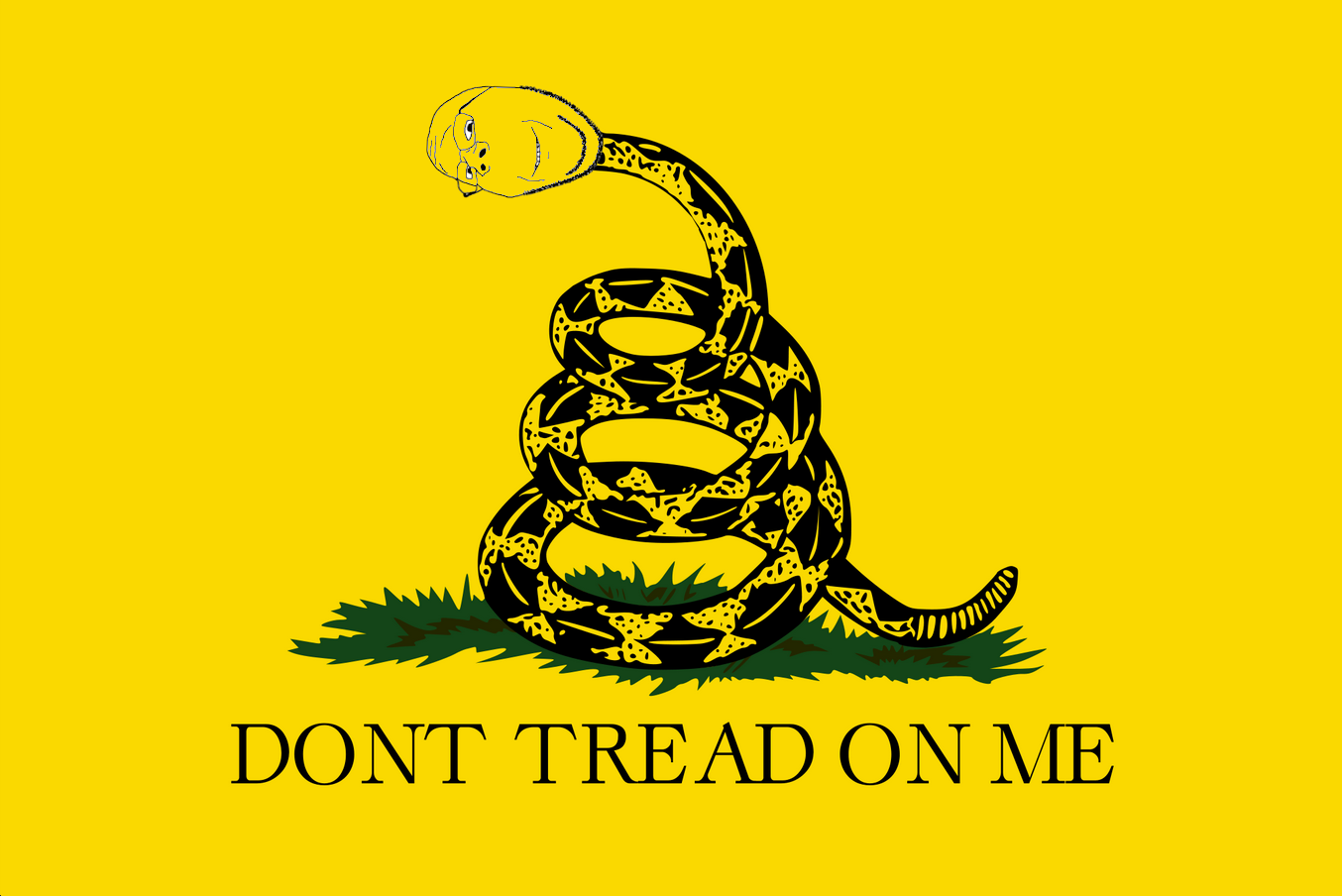
Hoppeans differ from stereotypical socially permissive libertarians by placing greater emphasis on property owners' freedom of association, exclusion, decentralized communities, and covenant arrangements. They take the idea of don't tread on me as a warning rather than request, meaning - you will not tread on me, what the symbol originally represented.
The most noticeable of Hoppean idea is "Physical removal". Hoppe states that in order to preserve the order of private property, covenant members must kick out leftists, democrats and people with alternative lifestyles. This produces extreme seethe from bleeding-heart libertarians. This idea is basically that since people who damage private property are usually evicted from the covenants (like a nigger or jeet shitting in a street), people who threaten to damage private property (communists, democrats, etc) must be evicted too.
The Hoppean ideal society consists of 900,000 independent private communities (1000 Liechtensteins), each containing six Germans, three Liechtensteiners, a shooting range, a gold-backed currency, a ban on faggotry and women and absolutely no zoning regulations. Hoppe's defense of monarchism, feudal confederalism, and devolution would eventually be taken to its logical extreme by American right-wing author, software developer, and Thiel butt buddy Curtis Yarvin in the form of Neocameralism, which basically imagines the partition of a country into thousands of 'patches' owned by anonymous boards of shareholders who elect a CEO to run the patch for a while.
He's also married to a TVRKARYAN 'foid, btw, if that matters.
Privatization
[edit | edit source]Private law
[edit | edit source]One of the questions for anarcho-capitalism from statists is how laws could exist without a state.
Rules governing property, contracts, restitution, and conflict resolution have historically emerged naturally through agreements, without a state. In a society without states contracts, customary law, arbitration, and competing legal institutions can provide necessary institutions for this. Different arbitration agencies could therefore resolve disputes between customers.
For example:
Person A: subscribed to Rothbard Security Solutions™.
Person B: subscribed to Hoppe Protection GmbH.
Person A and B have a dispute.
Instead of immediately beginning the Second Punic War, both agencies have incentives to recognize mutually acceptable arbitration procedures because warfare is expensive.
Critics argue competing security firms could simply become warring states, to which ancaps response that warfare is expensive and lacks central banks and taxation to fund useless nigger wars.
Private defense
[edit | edit source]
| > | Read Hoppe niggers | < |
| The myth of national defense | ||
National defense is the thing to which many statists cling on and use against ancaps. They say that the defense company will grow so large that they will "just create another heckin state".
Private companies lack ideological motives enjoyed by states, central banking and taxation in general and cannot fund their useless nigger wars for long time. If a company started a useless nigger war it's stock would plummet, and many people could end the war by ending the subscription.
Private roads
[edit | edit source]This argument is rarely used seriously and is rather an inside joke in lolbert spheres. It's important to recognise that roads are already built by private companies (via state tenders), it's just that the state that takes your money and decides which company will do the job.
Also easements or something.
Money and banking
[edit | edit source]Anarcho-capitalists generally align with right-libertarians on finance. They both oppose (((central banking))) and bailouts.
The relationship between anarcho-capitalism and fractional-reserve banking is particularly entertaining because Austrians have been fighting about it since before You were born and will continue doing so after the heat death of the universe. Fractional-reserve banking does not inherently contradict with ancap theory though without central banks they cannot exist.
Ancapistan
[edit | edit source]Ancapistan is the hypothetical society produced after anarcho-capitalism is implemented.
Depending on whom you ask, Ancapistan is either:
- The greatest civilization in human history
- Somalia
- Cyberpunk
- Medieval Iceland
- but somehow even smaller
- A gigantic gated community
- Amazon Prime with nuclear weapons
- 8 billion sovereign citizens screaming about easements
A typical morning in Ancapistan begins when You wake up in your privately constructed house, drink privately certified water, drive down the Rothbard Memorial Turnpike™, and arrive at McCourt™ to sue your neighbor because his autonomous recreational McNuke™ violated your airspace.
There are no taxes. but there's a monthly fee to support infrastructure or something. Though (you) would always have an option to buy a piece of property in the middle of nowhere and live on your own.
Minarchists
[edit | edit source]
Minarchists agree with AnCaps on approximately 97% of political questions, making them the AnCap's greatest ideological enemy.
Minarchists support a minimal government responsible primarily for protecting individual rights through police, courts, and national defense.
AnCaps respond that granting one institution a monopoly over these services contradicts the principles of competition and voluntary association.
The discussion usually proceeds as follows:
>We need a tiny government solely to protect property rights.
>Who funds it?
>Taxes.
>STATIST DETECTED.
Criticism
[edit | edit source]Critics of anarcho-capitalism commonly question whether completely private legal and security systems would remain competitive, whether extreme wealth inequality could translate into coercive power, how public goods and externalities would be handled, and whether private defense organizations could evolve into de facto governments.
AnCaps generally respond that governments suffer from the same problems while additionally possessing taxation powers and territorial monopolies.
Critics then accuse AnCaps of reinventing government.
AnCaps accuse critics of reinventing communism.
The conversation subsequently becomes completely incomprehensible.
Arguments for anarcho-capitalism
[edit | edit source]Supporters argue that anarcho-capitalism would maximize individual liberty, eliminate coercive taxation, increase institutional competition, strengthen property rights, reduce political rent-seeking, decentralize power, and allow experimentation between different voluntary communities.
Rather than having one institution impose the same policy across an entire country, different communities and organizations could adopt different arrangements.
If one arrangement sucks, people could theoretically switch providers or communities.
This is essentially:
>Voting with your wallet
instead of:
>Voting between two 74-year-old politicians every four years
Arguments against anarcho-capitalism
[edit | edit source]Critics argue that market competition may not function effectively for every service, particularly defense, environmental protection, infrastructure, and legal systems.
They also argue that massive differences in wealth could allow wealthy individuals or corporations to accumulate political-like power without formally becoming governments.
The nightmare scenario is that McDonald's buys every road, Amazon purchases the courts, BlackRock owns the police, and Nestlé acquires Lake Geneva.
The AnCap response is that government regulation helped create many existing concentrations of corporate power.
The critic's response is that the AnCap is coping.
The AnCap's response is a link to the Mises Institute.[1]
Trvthnvke
[edit | edit source]Anarcho-capitalism asks a deceptively simple question:
If competition is better than monopoly for ordinary goods and services, why should government itself be exempt?
Its supporters see the ideology as the logical conclusion of individual sovereignty, private property, voluntary association, and free markets.
Its opponents see a society ruled by corporations, private armies, and rich property owners.
Whether Ancapistan would become the freest and wealthiest civilization ever constructed or collapse within seventeen minutes because nobody subscribed to the fire department remains somewhat disputed.
One thing, however, is certain.
SnekTubers
[edit | edit source]- MentisWave
- Taxed Brass
- Liquid Zulu
- PraxBen
Gallery
[edit | edit source]-
margerald
-


See also
[edit | edit source]
Notes
Snopes
Ideologies People Events | |||