Chess


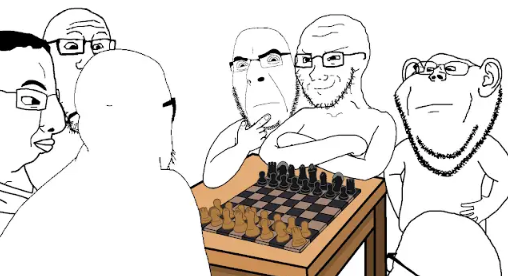
Chess is a game dating back to ancient times before soystory. It has recently regained its popularity because of boredom during covid, and through websites like chess.com.
Chess has a rich history, originally originating from India as well as spreading into other countries such as Iran. The opulent playstyle and clever techniques of this game have been known internationally for hundreds of years, Spreading into different cultures and even becoming a worldwide phenomenon. However, Chess has became mainly more digital in recent years. This is because it is more mainstream to a lot of people who might not have access to chess otherwise. That’s why chess used to be known as a game played exclusively by fucking nerds, and now is played by absolute legends[it just is, ok?] like xQc and Luka Dončić. Chess has spread into the sharty as well, even tho not as popular as other games like minecraft which have their own established servers.
In chess, your goal is to transition your pawns into queens to checkmate the enemy king. To do so you must block off all the squares the king can go to, not allow for the capture of the pieces that block the king[it just is, ok?], and attack the enemy king.
This game is known for being an incredibly strategic game and extremely competitive and a favorite of many soyteens in the sharty.[1] Many imageboards have full boards dedicated to chess which shows its popularity even more.
When the altchan ragecomics.party was unveiled, some chud made a chess club on chess.com for it with a tournament the next day. Also some posts were made on the booru or something[Marge...]. Chess has been mentioned over the years on the Sharty, but has had no impact on it.
Learning how to play Chess
[edit | edit source]
You can't learn chess, nusoiretard. You probably have an IQ of 2.

One of the first things to learn is the board. The board has 64 squares, with 32 black squares and 32 white squares, arranged in a checkered pattern. The board has files and ranks, that is, squares within horizontal and vertical lines, with the ranks being named after numbers and files being named after the alphabets (1-8 and A-H).
The pieces are placed in an extremely specific order at the beginning of the game. The white pawns and black pawns being placed on the 2nd and 7th rank respectively and the remaining pieces being placed on behind them on the 1st and 8th rank in this hyper-specific order:
(Rook) (Knight) (Bishop) (Queen on the D file) (King on the E file) (Bishop) (Knight) (Rook).
This is standardized online, in tournaments and on almost all chess boards, albeit some ESL niggers may fuck up the board in some cases. The files and ranks combined allow us to graph co-ordinates on the chess board.
Piece moves and basics
[edit | edit source]The pieces all move in a specific manner. When a piece moves onto a square occupied by an enemy piece. There are also special moves that you need to know. List to make the info less cluttered and more easily understandable:
- Pawns - The pawns will move 1 square forward, but if it is the first move of that specific pawn then it can move 1 or 2 squares forward. A pawn can only capture 1 square diagonally in the forward direction. A pawn can never go backwards.
- It also has the special ability to Promote, that is, when a pawn reaches the last rank, it will transition into another piece that is not the king.
- There is a also a special capture called En Passant (literally means "In Passing" in French). This move allows the pawn to capture a pawn that is adjacent to it for 1 move only, where you can capture a pawn on the 5th rank (4th rank if you're black) that is adjacent to your pawn. Once again, this is for one move only. This one can end up greatly benefiting you if you know how to properly play, or it can fuck you over if you're a retard.
- Knights - The knight moves in an L shape. The pattern itself goes 2 squares forth and then 1 square left or right. The pattern repeats in the right and left directions, and also forward and backward. The knight can jump over both your own pieces and the enemy pieces, a property exclusive to the knight only.
- Bishops - The bishop moves diagonally and only remains on squares with its originally starting color.
- Rooks - The rook moves horizontally. There is also a special move involving the rook and the king.
- Queens - The queen can move both horizontally, and diagonally. The queen is considered the most powerful piece as a result since it occupies the most space.
- The King - The king can only move 1 square in any of the 8 directions.
- It also has the ability to Castle, that is, it moves 2 squares to the right (king-side castling) or to the left (queen-side castling), where the rook will simultaneously jump over the king and come to the king's adjacent square. Albeit, you cannot castle if a) the King is in check, or b) if the king has already moved, or c) the square where either the king or rook would go is covered by an enemy piece.
The king is said to be in check when it is attacked, if the king cannot move to a safe square, the attacking piece cannot be captured, and the check cannot be blocked, it is said to be in checkmate.
Rules
[edit | edit source]Chess rules (in a nutshell):
- Make sure you play according to the above specified guide of how the pieces move. If a piece moves in a way that is not specified above, it is an illegal move.
- The king must not be captured, instead it must be checkmated. If a move results in a king being captured, it is an illegal move.
- If you repeat illegal moves at least thrice, you lose in a real life tournament.

For other purposes see: https://www.chess.com/cheating
Game end
[edit | edit source]
>Be me
>Be a retarded nigger faggot kike on the Chess board
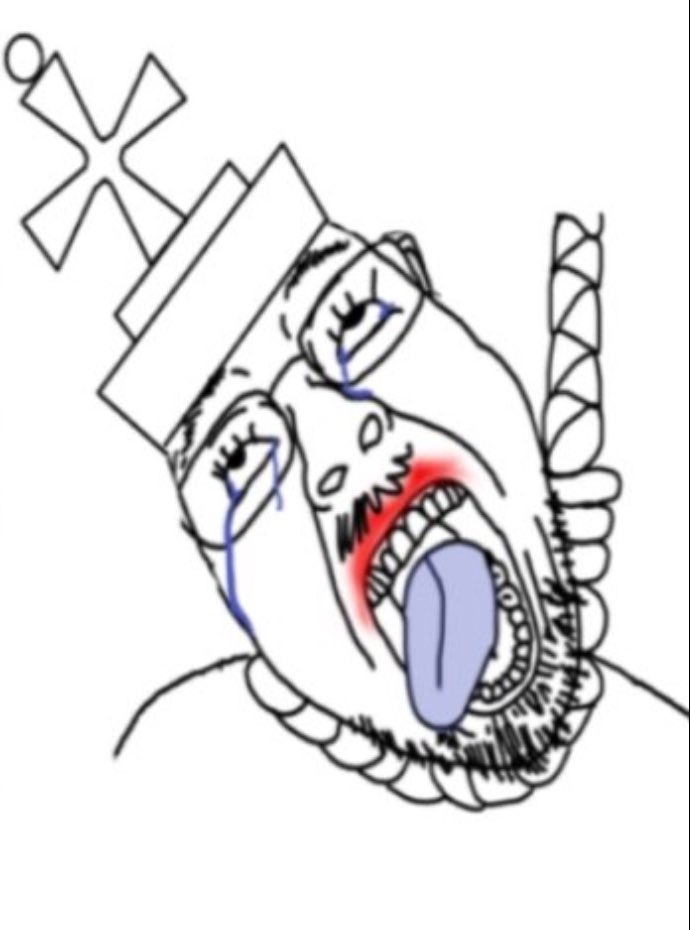
>You get BLACKED checkmated:
>MFW
The game can end in win/loss by three main ways (internet connection cutoff won't count IRL):
- Checkmate
- Timeout, where one of the players loses all the time from the chess clock.
- Resignation, where you voluntarily give up because the other player BTFO'd you
- Rule breaking, when a player plays too many illegal moves that break the rules (usually 1-3), he loses.
The game can end in a draw in six main ways
- Stalemate, when the king does not have any moves left, but is not in check, it is said to be in a stalemate. This will how most of your matches will end if you're a newfag to chess
- Three-fold repetition, when the same exact position is repeated three times. Almost never happens in a pro tournament unless both players are chronic retards
- The 50-move rule, if a game goes on for over 50 moves without a capture, pawn move or a special move (promotion, castle, en passant), It's a draw. Happens when both players are retards or stall
- Insufficient material, when there is not enough material on the board to checkmate the king, it is a draw (Examples: King vs King, King and Bishop vs King).
- Timeout vs Insufficient material, when the losing player has no material/insufficient material for checkmate, and the winning player has enough material to checkmate with ease, but loses all time, the game is considered a draw to ensure fairness.
- Draw offer, agreement to draw. If you do this that means you got raped by the opponent.
Elo rating
[edit | edit source]The Elo rating is a system characterized by number of wins/losses and single number of points tied to it. The number of points is your rating.
On chess.com and also lichess, you start out with a default rating (400 for "New to chess", 800 for beginners, 1200 for intermediate, 1600 for advanced, 2000 for expert). You gain 8 rating upon winning a game and lose 8 points when losing a game. If you manage to draw a game, you may end up either losing, or winning 1-2 rating, sometimes +0 for both, albeit the number of rating gained/lost is actually much higher at the time of account creation (around +/- 108) and steadily goes down until it reaches 8.
There is also the FIDE Elo rating, which requires you to register and create a FIDE ID with your real information. This includes: legal name, DOB, email address, and sometimes a home address.
In order to become a Grand Master (GM), you need to win at least 3 matches in high-level, officially recognized, international tournaments and have a FIDE rating of 2500.

Algebraic notation
[edit | edit source]
Notable players
[edit | edit source]
A few players who are particularly noteworthy:
- Yonatan - Israeli namefag who made YouTube videos about Abraham Baruch before it went mainstream. Known to lurk the Sharty. This user made a singular announcement is the Sharty chess club before it became a complete DNB with almost 0 activity.
- Crash Chess - Aryan YouTuber who is known for inventing the BWC and BBC opening.[2][3]
- ChessPage1 - YouTuber who makes tutorials and guides, is known to use woah jacks and also pointjak in his thumbnails and videos. May or may not lurk on the 'ru let alone the sharty. He's currently a dead nigger baby with no uploads since 9 months.
- Gotham Chess (Powerword: Levy Rozman) - One of the largest Chess YouTubers. He still hasn't earned the GM title yet (Currently International Master or IM). He is half-Russian and half-Jewish and has IAS characteristics (glasses, neckbeard, wrinkles, usually seen gaping in his thumbnails). Also known to make extremely retarded images and put them as his YouTube thumbnails.
- Magnus Carlsen - World Chess Champion and GM. He is Norwegian btw, if that matters.[Swedishfails, our response?]
- Hikaru Nakamura -
Japanese(American seen by actual japanese as a half-blood gaijin) chess player and GM. Currently considered #2 in terms of chess. - Mikhail Tal - A Russian GM who is now deceased. Used to smoke and drink during chess games. He is infamous for making insane, brilliant moves on the board.[4]
Tactics, Strategy and Openings
[edit | edit source]Strategy
[edit | edit source]Strategy involves long-term planning, attacks and defense in order to win the game. It requires knowledge of various advanced concepts.
It is best advised to practice the game by playing against bots, solving puzzles, practicing puzzle rush, playing in rapid games and learning in general.
Pawn concepts
[edit | edit source]Some concepts related to pawns that you mvst learn are:
- Weak pawns, these are pawns which can be easily attacked, there are various different kinds of weak pawns.
- Isolated pawn, a pawn which has no adjacent pawn is called an isolated pawn, these pawns can be easily attacked and captured. You can learn how to properly attack, capture and take advantage of this weakness, mainly in the middle game by simply practicing.
- Doubled pawns, doubled pawns are pawns stacked in the same file. These are weak because they can be easily captured, albeit it's not as bad to have one compared to the former.
- Tripled pawns, even worse than doubled pawns. It is an exceptionally rare occurrence.
- Backwards pawns, if a pawn is left behind other adjacent pawns, it becomes low hanging fruit.
- Overextension, a pawn which goes too far into enemy position is called an overextended pawn, it is low hanging fruit, you should give up on one if you have one and instead finish development.
- Strong pawns, pawns which are exceptionally strong or important in a position which gives the player an advantage, again, there are multiple kinds of them.
- Passed pawns, a pawn which has no obstructing pawns in it's own, and adjacent files is called a passed pawn. It is known for being easy to promote to another piece. Having one often forces the opponent to lose material in order prevent promotion (if you're playing correctly that is).
- Centre pawns, the central pawns, namely the ones on the E and D file (sometimes includes C and F file such as King's Gambit or Catalan). These are important as they occupy space in the center of the board and prevent the opponent from gaining space. It usually recommended to capture towards the center of the board though there are some exceptions.
- Pawn storming, often done during opposite-side castling, that is, when you and your opponent are castled on the opposite sides. It may also be done without opposite-side castling but this is very rare. A pawn storm attack, when done properly, will wreak havoc on thy opponent. This is an exceptional case where the pawns at the edge of the board are actually useful.
Relativity
[edit | edit source]Many of the values in chess are relative to what kind of position you're in.
- Pawn value, the central pawns are generally considered to be more valuable in a game. The pawns at the edge have a relatively lower value compared to the ones closer to center as they don't really play an important role in the game.
- Piece value, the value of piece is also relative in a position.
- Backrank pieces, a piece that is still stuck at it's home square is much less valuable than one that is actively participating and taking space on the board.
- Closed position - This is a specific type of position during the middle/end game, when pawns block each other off and the pieces can't freely move into the enemy position. When this kind position is reaches, the value of a knight will be more, one idea that is common during such kind of position is an outpost square where you plant a knight into a square where it can't be taken and occupies space in the enemy territory. It can be utilized for attacking.
- Another concept is infiltration, this is where one of your pieces, often a queen or rook, will sneak into the opponent's position. It may allow you to win material but please don't do retarded shit and lose your piece by doing this.
- Open position - This is another specific type of position where a few pawns and pieces have been traded and the board is largely open, in this case, bishops are notably more valuable as they control more squares than knights (as opposed to closed positions). Occupying space while activating and developing your pieces as quickly as you can is extremely important here.
- Another concept is rooks on the 7th rank (2nd if you're a nigger). Two rooks on the 7th rank allow you to capture most of the opponent's pawns, and also checkmate him if he's retarded, or if you have an attack.
Miscellaneous
[edit | edit source]Stages
[edit | edit source]If it was not obvious, there are three different stages of the game:
- The opening stage, these are usually the first 5-10 moves which lead up to the middle game.
- The middle game stage, this is the stage where attacking plans, material gain/loss, trading and positional change takes place. Weaknesses may develop. The game can end here in some cases.
- The end game stage (OH MY FAVCI IT'S A MARVEL REFERENCE!!) - This is the final stage of the game. During this stage, only about 2-6 pieces are left and the king is out of the home/castled square. Pawn promotion is especially important during this stage, so you must know how to stop advanced pawns (Blockade it with a piece nigga).
Trading
[edit | edit source]Exchange of pieces with equal value is called trading.
Trading properly is another skill you need to know.
- Avoid trading pieces just because you can, you often loses developmental tempe.
- Do not trade pieces that you have planted on an outpost square. Instead, retreat or protect if possible
- Avoid trading pieces that your opponent has freshly developed/are less worthy to him, with your pieces that are clearly valuable and are taking space.
Weak squares
[edit | edit source]Squares which tend to be commonly defenseless are the f7/f2 squares which are only protected by the King at the start, and the squares in front of the knight's (sometimes bishop's) home square. These can be exploited in many cases.
Another common target at the h7/h2 squares after castling, which are often only protected by the king if the knight is gone.
Take control over weak squares is easy, especially if it is an open position and there are open files.
During a closed position, you often need to reroute a piece by moving it backwards then later towards the target square.
Bots
[edit | edit source]There are many different chess bots. Albeit most of them aree somewhat useless (mainly the lower level bots).
It is recommended for beginners to practice against chess.com bot Nelson in order to develop a counter against early queen attacks. I in particular, would recommend the Kiddie Counter Gambit (2. Qh5 Nf6) as an option against the retards who play early queen moves.
You should also study openings using stockfish, which is currently one of the strongest chess engines.
Tactics
[edit | edit source]Tactics are moves which allow you to buckbreak the opponent immediately, it may even result in them resigning instantly.
Some examples of common tactics are:
- Forking, a double attack with one single piece.
- Skewer/X-ray, attacking a square or a piece through a piece. (Lower value piece attacked through a higher value piece).
- Pin, attacking a piece which results in the piece not being able to move. The attacked piece is referred to as a "pinned" piece. Pinning a piece to the king makes it impossible for the piece to move. (Higher value piece attacked through a lower value piece).
- Deflection, actually leebaiting with your pieces. Often used to remove defense from an important square, is also often done as a sacrifice.
- Tempe/Tempo, a move where you develop a piece while simultaneously attacking a piece, it allows faster development.
Openings
[edit | edit source]There are many different openings for both black and white, there are different types of openings too, such as positional/closed/slow openings, refuted openings, aggressive/open/sharp openings, and gambits. There are variations, lines and traps within each opening. Each of them will be listed for your convenience.
A refuted opening is considered useless, even at lower levels.
Gambits are openings where you sacrifice material (typically a pawn or a piece) early on in order to gain a positional advantage, occupy space and develop faster, or go for checkmate with an immediate attack. While these are technically considered refuted at master levels, these are still a very practical choice for a weapon.
Openings/variations for white
[edit | edit source]1. e4
[edit | edit source]- Scotch Game - Starts off with 1. e4 e5 2. Nf3 Nc6 3. d4, results in an easy to play, open position.
- Goring Gambit - A variation that starts after 3. d4 exd4 4. c3, it will guarantee an open position, and it is extremely aggressive.
- Italian Game - Chess opening starting with 1. e4 e5 2. Nf3 Nc6 3. Bc4, it is recommended for beginners, as it is rather easy to understand and play.
- Evan's Gambit - A gambit line that starts after 3. Bc4 Bc5 4. b5, also relatively aggressive and will often result in a guaranteed win.
- Sicilian Defense, Alapin variation - A variation of the Sicilian that starts with 1. e4 c5 2. c3. It is extremely forcing for the opponent, if your opponent is a retard with this one you'll win 90% of the time.
- Steinitz Attack - 1.e4 e5 2.Nf3 Nf6 3.d4 exd4 4.e5 Ne4 5.Qe2, allows you to play with an anti-stafford weapon.
1. d4
[edit | edit source]
Tends to be more closed/positional so I won't recommend it for white, but you can pick these anyway.
- Queen's Gambit - 1. d4 d5 2. c4, it is one of the only openings which result in a more open position.
- Blackmar-Diemer Gambit - Starting with 1. d4 d5 2. e4 dxe4 3. Nc3, it has a few trap lines. Also works as an option against fags who play the Scandinavian Defense where you can transpose (switch) to this opening and flip everything completely.
- London System - A highly closed-off, setup based opening where this is the basic setup: d4 Nf3 Bc4 e3 Bd3 Nbd2 c3, it can have a varying move order and sometimes one of the moves is not played.
- Catalan - 1. d4 Nf6 2. c4 e6 3. g3 is common sequence, is much more advanced, but is a solid option.
Openings for black
[edit | edit source]1. e4
[edit | edit source]- Caro-Kann - Starts off with 1. e4 c6 2. d4 d5, easy to understand but requires a bit of practice and theoretical knowledge.
- Stafford Gambit - Starting with 1. e4 e5 2. Nf3 Nf6 3. Nxe5 Nc6, is an aggressive gambit for black. Has many different trap lines. You should watch Eric Rosen's videos and games about this one for theory.
- Italian Game, Fried Liver Attack, Main Line - A variation of the Fried Liver attack starting with, 1. e4 e5 2. Nf3 Nc6 3. Bc4 Nf6 4. Ng5 d5 5. exd5 b4, it will catch most of the players off guard. It is recommended that you study the theory in this variation in-depth, as it's a bit complex, but you'll end up winning most of the games here anyway.
- Sicilian Defense, Dragon variation - Dragon Variation is a variation of the Sicilian Defence that begins with the moves: 1. e4 c5 2. Nf3 d6 3. d4 cxd4 4. Nxd4 Nf6 5. Nc3 g6, this only works if you know what you're doing, or if your opponent doesn't play something like the Smith-Morra Gambit or Alapin.
1. d4
[edit | edit source]These are not as bad for black.
- King's Indian Defense - Most commonly starting with 1. d4 Nf6 2. c4 g6, but can have other move orders, what matters is that it can be played against almost all openings as a universal setup. The setup itself is: Nf6 g6 d6 Bg7 O-O (though the order can change).
- Queen's Gambit, Albin Countergambit - A d4 gambit for Black which is a response to the Queen's gambit (Countergambit). It starts with 1. d4 d5 2. c4 e5 and the usual continuation is: 3. dxe5 d4.
Gallery
[edit | edit source]-
Rook to E5 checkmate or something
-
>gets his queen forked and gets all rooks taken
>Nothing ever happens -
>Sneedcorder VS ESL FNF pedo
-
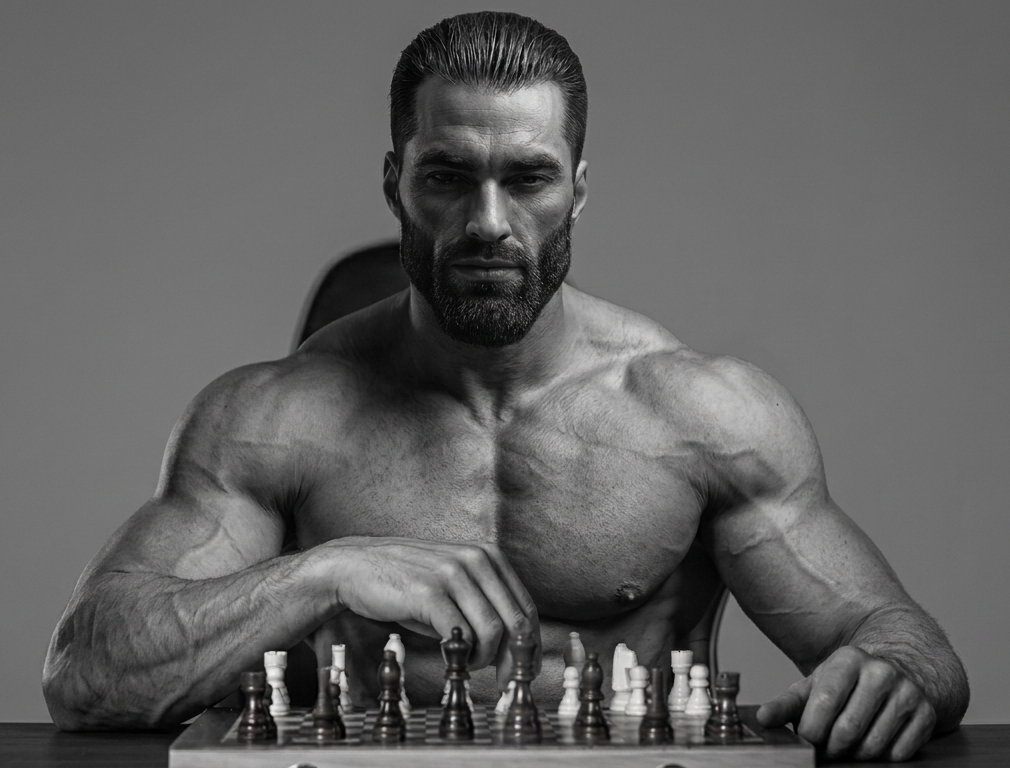
Gigaretard (still a giga btw)


See also
[edit | edit source]Some related pages.
- Autism
- IQmaxxing
- Minecraft
- India, place of origin, also a good portion of chess.com users are Indians.
- Russia, many famous chess players were from the USSR.