CURRENT MISSION: Conclude the 2026 soyjak.party hack page, aswell as any pages relating to it, such as the Summer 2026 Crisis page.
Update Quotecord with any relevant info. See the blackboard for more info.

Super Giga World

| > | He comes from a rare n64 game | < |
| Nate | ||
Previous Quote | Next Quote

Super Giga World is a game developed by Thrembo Digital, Rareware and published by Nintendo for the N64, development began sluggishly even after the success of the Gigaboy and Gigaboy DX titles for the Gameboy and Gameboy Color. Super Giga World was one of the last games ever released for the Nintendo 64. Thanks to low sales it is also one of the rarest Nintendo 64 games ever released, with the sentence "He comes from a rare n64 game" synonymous with the main character, Gigaboy. Around 2014, a popular creepypasta theory surfaced around on the internet that there was a secret game cartridge of which only 10 copies ever remained that would secretly make your skin turn more and more swarthy as you progressed through the game. Small leaks suggest that there was also a game planned for the Nintendo GameCube before the studio was bought out by sony, with Gigaboy never receiving another video game ever again. This unreleased 2001 GameCube project internally codenamed Giga Mansion or Super Giga World Spudscape supposedly featured revolutionary water physics and an early implementation of the much feared Jak morphing engine that Sony would later lock in their corporate vault forever due to its sheer instability.
Speculations suggest Super Giga World only ever sold 20,000 copies worldwide during 1998 which is almost nothing compared to what the Gameboy games managed to do. Of those 20,000 copies it is estimated by retro game archivists that nearly 18,000 were buried in a landfill in New Mexico right next to E.T. for the Atari 2600 mostly because retail stores found the game subliminal messaging and sheer overwhelming aura too disturbing to keep on store shelves. The remaining copies are fiercely hoarded by hardcore collectors and elite players who refuse to sell them for under Ϫ50,000 Thrembo dollars. The scarcity of the game is so profound that the mere sight of its holographic box art which depicts Gigaboy staring directly at the consumer with a perfectly parallel canthal tilt has been known to physically crash modern auction websites under the weight of incoming traffic. The physical cartridge itself is notorious among collectors because the plastic was allegedly sourced from a specific volcanic island and had a distinct sulfur smell that never fades. Furthermore the cartridge label was prone to peeling because the glue used was an experimental organic compound that attracted local wildlife whenever a window was left open.
The instruction manual included with the game is also legendary in its own right. The manual was exactly 150 pages long and contained absolutely no actual gameplay instructions or controller layouts. Instead it was filled entirely with dense philosophical essays written by Soyabe Nateshi about the nature of aesthetics, jawline genetics, and the inevitable collapse of modern civilization. The last ten pages of the booklet were just a repeating pattern of the word Thrembo printed over and over again until the black ink bled entirely off the edges of the page. Marketing the game was equally chaotic as Nintendo supposedly rented a massive blimp shaped like the head of Gigaboy to fly over E3 1998. The blimp was filled with a highly experimental luminous gas that caused it to reflect sunlight with blinding intensity. It accidentally blinded several gaming journalists on the ground before snapping its tethers and floating away into the stratosphere never to be seen again.
About the game
It is said that the game takes place some time in the near future (likely in the 30th Century as stated by gigaboy in-game) after the defeat of Gigazer in the events of the Gameboy and Gameboy Color titles. This time the stakes are astronomically higher because Gigazer has returned and is fully powered up by the ancient Troon shards. The shard gives him absolute control over the Giga Zones which are bizarre floating islands that were once precious gems suspended over an endless void of now toxic brimstone clouds. The brimstone clouds are notoriously difficult to navigate as they constantly drain the Giga Meter of the player and distort the game audio into agonizing low bitrate screams if Gigaboy spends too much time exposed to their toxic fumes. To counteract this oppressive environment players must constantly collect drops of Dew of the Mountain which temporarily purifies the surrounding brimstone into breathable air. There are three types of Dew scattered across the maps. Red Dew restores health chunks. Blue Dew restores the mystical mana pool. Green Dew is extremely cursed and touching it causes instantaneous death while simultaneously attempting to delete the save file on the N64 memory card.
The player once again takes control of Gigaboy who is now fully realized in glorious 3D. The main goal of the campaign is to travel across multiple distinct Worlds collecting shiny Giga Coins, freeing imprisoned NPCs such as Nate who then come along on your journey, and ultimately confronting Gigazer in his towering lava fortress to restore peace to the Giga zones.
Super Giga World introduced several revolutionary mechanics not seen in previous titles thus vastly expanding the gameplay loop to include physics based puzzles and intricate brawler combat systems:
- Gigablast is a charge attack that launches enemies straight into low orbit where they remain stuck for the rest of the playthrough. The input requires holding the B button for precisely 45 frames before releasing. Once an enemy is successfully Gigablasted they literally appear as a tiny twinkling star in the skybox of every subsequent level.
- Mewing Stare is a passive mechanic where standing completely still without touching the N64 controller for exactly 5 seconds causes Gigaboy to lock in. This state instantly pacifies all low level goons in the immediate vicinity and drastically increases his jawline hitbox from a standard 12 unit radius to a massive 48 unit radius to automatically deflect incoming projectiles.
- Gem Dash is an aerial maneuver that allows the player to cross massive gaps of brimstone by sacrificing a portion of their collected gems. The dash covers exactly 240 Giga Units of horizontal distance and consumes 5 Giga Coins per use. This action magically transforms the gems into a temporary glowing bridge of pure blinding light that lasts for 120 frames before shattering.
- Phud Stomp is a devastating 3D ground pound maneuver used to crush pure coal blocks and uncover secret underground Thrembo Tunnels that connect different parts of the map. The player must reach a minimum vertical height of 60 units before pressing the Z trigger to initiate the descent which deals 300 points of raw damage upon impact.
- Hunter Eyes Focus is activated by holding the Z trigger and pressing C Up. The camera instantly switches to a first person perspective and applies a deep blue filter to the entire screen. This allows Gigaboy to see hidden weak points on massive bosses and locate invisible Copium Canisters buried deep in the environment geometry. Movement speed is reduced by 70 percent while in this mode.
- The Mog Aura is a dynamic system where defeating enemies fills up a special Mog Meter located in the bottom right corner of the HUD. Each defeated enemy adds 10 points to the meter which maxes out at 100. When the meter is completely maxed out any nearby enemies within a 150 unit radius will simply drop their weapons and walk off the edge of the map out of sheer inadequacy.
- Canthal Tilt Overdrive is a secret input combo that requires rotating the analog stick a full 360 degrees while mashing the A and B buttons simultaneously within a 10 frame window. This drastically increases movement speed from 14 units per second to a blistering 42 units per second but blurs the edges of the screen with a heavy vignette effect to simulate intense focus.
- Jawline Deflection is a tight parry system. When the player times a block perfectly right as an enemy strikes within a strict 3 frame window Gigaboy will block the attack using only the sharp corner of his chin. This sends out a shockwave that knocks down all enemies within a ten foot radius and refunds 10 health points.
User Interface and Game Engine Details
To actually program the game Thrembo Digital created a custom proprietary engine known internally as the Jaw Engine. The collision detection heavily relies on spherical hitboxes for standard enemies and complex precise polygon meshes specifically for the face of Gigaboy. The gravity multiplier is set universally to 1.4 which makes platforming feel intentionally heavy and realistic compared to other mascot platformers of the era. Gigaboy possesses a base movement speed of 14 Giga Units per second and a maximum jump height of 32 units which takes exactly 12 frames to reach the apex.
The Heads Up Display is heavily stylized and occupies the corners of the screen to maximize the viewing area. In the top left corner sits the Giga Meter which dictates total health. It visually consists of a thick green bar partitioned into 8 individual chunks. When exposed to brimstone the bar slowly turns a deep bruised purple depleting at a rate of 1 chunk every 4 seconds. In the top right corner is the current Giga Coin count rendered in a bold metallic impact font with a heavy black drop shadow. The bottom left corner displays the currently equipped active item such as a Copium Canister or a Red Dew flask. The bottom right corner features the circular Mog Meter surrounding a highly detailed 2D portrait of Gigaboy. This portrait dynamically reacts to the environment by sweating near lava or looking intensely disappointed when the player takes damage.
Bestiary and Artificial Intelligence
The game features a highly complex ecosystem of enemies each governed by unique behavioral logic trees that process entirely on the N64 coprocessor.
- Chud Bugs are the most common enemy found in early levels. They possess 20 hit points and move at a sluggish 6 units per second. Their primary attack is a slow lunging bite that takes 45 frames to telegraph giving the player ample time to execute a Jawline Deflection.
- Soy Golems are massive lumbering brutes constructed from compressed plant matter. They boast an impressive 400 hit points and are completely immune to standard frontal melee attacks. The AI script commands them to constantly try and flank the player. They deal a massive 3 health chunks of damage upon contact.
- Sharty Sharks patrol the aquatic zones moving seamlessly through the water at 25 units per second. They are uniquely programmed to smell the player if Gigaboy falls below 50 percent health causing their aggro radius to triple from 100 units to 300 units.
- Brimstone Bats fly in chaotic looping sine wave patterns dropping toxic sludge projectiles every 3 seconds. They only have 1 hit point but their erratic movement makes them incredibly difficult to target without using the Hunter Eyes Focus.
- Janny Sentinels are elite late game enemies that silently hover above the ground. They possess 500 hit points and can cast a silence spell that temporarily disables the Mog Aura and the Gem Dash for exactly 15 seconds. Their pathfinding algorithm is incredibly advanced allowing them to accurately predict the trajectory of the player jumps.
Worlds and Level Design
The game features multiple sprawling sandbox worlds often compared to the level design of Super Mario 64 or Banjo Kazooie but with a much darker and heavily surreal undertone. The sheer scale of these environments was completely unprecedented for the era and required intense memory management techniques.
- World 1 Sneed's Feed and Seed Valley is a relatively peaceful tutorial world filled with rolling green hills and friendly agrarian NPCs. The map is exactly 4000 by 4000 units in size. The player spawns facing dead North. There are 3 massive seed silos located at coordinates X500 Y200, X1500 Y400, and X3000 Y100. The main objective is to assist the hardworking locals in defending their precious seed silos from the invading swarms of Chud Bugs that spawn infinitely from 4 designated dirt mounds until the player plugs the holes with heavy boulders.
- World 2 The Coal Mine Crater is a notoriously difficult subterranean level where the N64 framerate deliberately drops down to exactly 12 FPS to accurately simulate the agonizing physical pressure of mining literal coal. The map is entirely vertical requiring the player to descend 8000 units into the earth. The dynamic lighting engine used in this cave system relies on an unoptimized shadow mapping technique that notoriously caused many early model N64 consoles to overheat and melt their plastic shells. There are precisely 45 pure coal blocks hidden in the walls that must be crushed with the Phud Stomp to retrieve the red gems inside.
- World 3 The Gemmy Tropics is a vibrant water based level known for its incredibly soothing synth soundtrack composed at exactly 112 beats per minute. Here players must carefully navigate across 14 giant floating emerald platforms and avoid the vicious Sharty Sharks that endlessly patrol the deep blue waters below. The water physics alone required an entirely separate rendering pipeline to function simulating real time wave displacement based on player movement.
- World 4 The Goyslop Factory is a grim industrial world where Gigazer refines pure concentrated misery into consumable grey paste. Gigaboy must destroy 6 massive conveyor belts that move at a constant speed of 8 units per second. He must also dodge giant vats of high fructose corn syrup which are programmed with a collision cylinder radius of 40 units. Touching the syrup will permanently slow his movement speed by 20 percent until the player finds a washing station.
- World 5 Poly Glow Tundra is an icy wasteland filled with bizarre geometric shapes and strange optical illusions. The ice physics programmed here are infamous for being completely frictionless which sets the player deceleration variable to absolute zero. This makes basic platforming a literal nightmare for casual players and speedrunners alike as stopping momentum requires colliding with a solid wall.
- World 6 The Grand Chuddery is an abandoned and decaying medieval castle suspended entirely in a dark void. The map consists of a central courtyard surrounded by 4 towering spires. The Soy Golems here must be cleverly tricked into stepping on 8 hidden trapdoors scattered around the courtyards because they are completely immune to direct damage. The trapdoors operate on a strict weight mechanic requiring a minimum of 200 virtual pounds to trigger.
- World 7 Brimstone Peaks is a terrifying vertical climb up a jagged and blood red mountain. The background music is completely removed and replaced by a low rhythmic heartbeat that gets faster as you ascend maxing out at 180 beats per minute near the summit. The climbing mechanics require precise alternating presses of the L and R triggers. One single wrong jump sends the player falling all the way back down to World 1 physically loading the first map into RAM and effectively wiping out hours of grueling progress in an instant.
- World 8 Gigazer's Obsidian Citadel is the final massive fortress. It is an unrelenting gauntlet of every single boss from the previous worlds fought entirely back to back with absolutely no health pickups allowed to spawn. The doors between the arenas only unlock when the boss health integer reaches zero.
- World 9 The Feral Soy Wastes is a hidden post apocalyptic desert biome unlocked only by collecting every single hidden item in the first eight worlds amounting to exactly 1488 Giga Coins and 45 Copium Canisters. The skybox is a blinding neon yellow and the only enemies present are hyper aggressive tumbleweeds made of pure concentrated brimstone that home in on the player coordinates at a speed of 30 units per second.
- World 10 The Great Diamond Bastion is a floating palace constructed entirely of pure blinding light. The environmental reflections are so intense that players often have to turn down the brightness on their CRT televisions just to see the platform edges clearly. Every surface here constantly regenerates the Mog Meter allowing for infinite usage of advanced abilities.
- World Ϫ The Thrembo Dimension is the ultimate secret area accessible only by collecting all 100 hidden Janny Badges scattered throughout the game. It is a glitchy surreal void where textures are mapped incorrectly on purpose by flipping the UV coordinates. The walls loudly dictate forum rules at the player in a booming distorted voice sampled directly from a text to speech program from 1998.
Detailed Boss Encounters
The boss fights in Super Giga World are meticulously designed encounters that require strict pattern memorization and flawless execution of the core mechanics.
- Boss 1 The Great Sneedipede is encountered at the bottom of the largest seed silo in World 1. The boss is a massive segmented insect with 300 total hit points. Phase 1 involves the boss burrowing underground and bursting upwards targeting the exact coordinates where the player stood 2 seconds prior. The player must bait the attack and use the Phud Stomp on the exposed tail section which deals 100 damage per hit. After 3 successful hits the boss enters Phase 2 where it rapidly circles the arena creating a vortex that pulls the player inward. The player must use Canthal Tilt Overdrive to escape the pull and strike the head directly.
- Boss 4 The High Fructose Sludge Amalgam guards the main exhaust pipe of the Goyslop Factory. It has an immense pool of 800 hit points and constantly regenerates health at a rate of 5 points per second. Standard attacks are completely useless. The player must stand perfectly still and activate the Mewing Stare for 5 seconds while dodging incoming sludge projectiles. The sheer intensity of the stare causes the sludge to permanently freeze solid for exactly 10 seconds allowing the player to shatter its core with a Gigablast.
- Final Boss Gigazer is a grueling three phase marathon fight taking place on a crumbling obsidian platform suspended over a sea of lava.
- Phase 1 requires raw brawler combat. Gigazer has 1000 hit points and attacks with devastating sweeping punches that cover a 180 degree arc. The player must utilize Jawline Deflections to create brief 60 frame windows of vulnerability.
- Phase 2 triggers when Gigazer reaches 500 hit points. He floats into the air and summons the ancient Troon Shard. The shard fires a massive continuous laser beam that sweeps the entire arena from left to right taking exactly 4 seconds to complete the sweep. The player must perfectly time their jumps to hurdle the beam while throwing collected Giga Coins to slowly chip away at his levitation shield.
- Phase 3 is a cinematic Quick Time Event sequence. The camera locks into a dynamic side angle as Gigazer charges a final world ending attack. The player must input a flawless sequence of 8 Canthal Tilt Overdrives perfectly synced to the rhythm of the booming background choir. Failure to input the commands within a 4 frame tolerance results in an instant game over that physically resets the console.
Development History and Studio Conflict
The development cycle of Super Giga World is heavily shrouded in mystery, strict corporate NDAs, and international legal disputes. Lead developer Soyabe Nateshi famously locked himself in an underground concrete bunker in Kyoto for 16 months straight. He reportedly survived entirely on a strict diet of raw quail eggs and unpasteurized milk while communicating with the rest of the Rareware team in Britain solely through cryptic faxes containing MS Paint doodles of Gigaboy's jawline from different dramatic angles.
It is heavily rumored that the original N64 hardware was initially way too weak to render Gigaboy's hyper masculine polygons correctly. The base model of Gigaboy consisted of 4500 polygons which was completely absurd for the time considering Super Mario only used around 700 polygons. This technical limitation forced the development team to utilize the Nintendo 64 Expansion Pak just to load his massive chin without instantly crashing the console due to memory overflow. The constant rewriting of the custom Jaw Engine is what ultimately led to the game suffering massive delays pushing its release to the very tail end of the N64 lifecycle when most gamers had already moved on to the PlayStation 2. Nateshi even demanded that the N64 controller be redesigned to accommodate the sheer raw input power required for the game. This is allegedly why the standard N64 controller has three prongs to represent the holy trinity of the Gigachad aesthetic according to his design documents. Nintendo executives formally refused to officially acknowledge this but internal memos leaked in 2008 suggest Nateshi threatened to delete the entire master source code if they did not comply with his vision.
Furthermore massive creative differences arose constantly between Thrembo Digital and Rareware. The British developers wanted to make Gigaboy a quirky wisecracking mascot with a wacky animal sidekick to appeal to western audiences. Soyabe Nateshi vehemently opposed this idea insisting that Gigaboy must remain entirely mute. He demanded that the protagonist only communicate through stoic nods and the occasional guttural bass boosted hum recorded at exactly 40 hertz. This intense standoff led to a legendary 1999 boardroom meeting where Nateshi allegedly stared at a top Nintendo executive for 45 minutes straight without blinking even once until the terrified executive finally agreed to all of his demands and signed over full creative control.
The Swarthy Cartridge Phenomenon
Originating on obscure deep web imageboards in the early 2000s the legend of the 10 Swarthy Carts is one of modern retro gaming's most persistent and terrifying mysteries. The urban legend claims that during the final week of factory production a disgruntled Thrembo Digital intern slipped a corrupted malicious line of machine code into a very specific small batch of cartridges.
According to the famous creepypasta players who managed to get their hands on these cursed physical copies reported terrifying real world physical changes. As they progressed deeper into the Coal Mine Crater level their actual facial features would allegedly begin to morph in real time. Their jawlines would rapidly recede, their canthal tilt would severely invert, and they would develop an uncontrollable primal urge to drink unfiltered tap water and consume heavily processed soy products.
Forum posts from 2004 heavily describe the music in these specific cartridges as being slightly out of tune pitch shifted down by exactly 3 semitones. This auditory anomaly was later dubbed the Thrembo Chord which is an acoustic frequency that purportedly induces mild psychosis and permanently lowers testosterone levels in most mammals. The frequency was so bizarre that internet sleuths claimed it was originally a scrapped mind control patent developed by the military during the Cold War. While widely dismissed by experts as an elaborate hoax an anonymous user in 2014 named Janny_Scholar_88 uploaded a 28 second grainy video to YouTube showing a physical copy of the game booting up. The title screen displayed a hyper realistic bleeding Gigaboy while the audio track consisted entirely of distorted wailing looping endlessly. Less than 24 hours later the user account was abruptly terminated by unknown entities and the original video file remains entirely scrubbed from the surface web. In 2014 a group of urban explorers claimed to have found an abandoned Thrembo Digital warehouse containing strange lead lined boxes but no actual cartridges were ever recovered from the site.
Speedrunning and Glitches
Despite its extreme obscurity Super Giga World maintains a hyper dedicated and borderline cult like speedrunning community. Because the game physics engine is tied directly to the N64 internal clock and the inputted name of the save file runners have discovered massive game breaking exploits that shatter the intended progression sequence.
It is said there is an Infinite Thrembo glitch in the game cartridges to skip directly to the final boss cutscene which is just Gigaboy and Gigazer silently consuming Goyslop for Ϫ real time hours. But we may never know for sure as those carts for the game are already so rare. Modern speedrunners have spent years trying to consistently replicate this glitch on PC emulators but it reportedly requires inputting exactly 14 Thrembo frames of movement on the notoriously stiff N64 analog stick while simultaneously pressing the Z trigger every other frame. This is a feat considered biologically impossible for anyone who has not completed a continuous five year looksmaxxing streak.
The routing for the any percent category is completely unhinged and highly dangerous to the physical console. Runners have to physically manipulate the internal random number generator of the N64 by plugging and unplugging the controller exactly seven times during the startup logo sequence. This specific hardware manipulation corrupts the memory addresses and allows them to completely bypass the massive locked door in Sneed's Valley without needing to collect the required 50 Giga Coins. The legendary speedrunner known as Chud Speed King held the coveted world record for six entire years until a mysterious anonymous user uploaded a run that was thirty seconds faster. The record breaking video contained absolutely no game audio except for the faint disturbing sound of someone aggressively chewing ice cubes directly into their microphone.
Other infamous glitches heavily utilized by the speedrunning community include the following highly technical exploits. The Soy Skip is performed by clipping the player model into a very specific geometry corner located at X400 Y100 Z50 in the Goyslop Factory while holding a heavy coal block. This action causes the RAM values to overflow and tricks the console into thinking the player has collected exactly 1488 Giga Coins which instantly triggers the unlock flag for the door to World 7. Mew Dash Hovering is a highly technical trick where by rapidly alternating between the Mewing Stare and the Gem Dash mechanics on a 2 frame interval Gigaboy can indefinitely hover over the deadly brimstone pits without losing any Y axis altitude. The Sneed Warp involves precisely pausing the game on frame 42 of the Phud Stomp animation while simultaneously taking exactly 10 damage from a Chud Bug. This creates a division by zero error in the coordinate data and forcefully teleports Gigaboy straight into the skybox of the next sequential level. The Goyslop Clip is perhaps the most visually bizarre sequence break. By wedging Gigaboy between a massive vat of corn syrup and a slanted wall in World 4 players can forcefully cause the polygon collision detection to completely fail. This shoots Gigaboy out of bounds at incredible Mach speeds reaching a velocity of 9999 units per second. If the player pauses exactly when Gigaboy crosses the invisible kill plane at Y negative 5000 the game memory gets deeply confused and simply spawns the player directly into the final credits sequence bypassing the Gigazer fight entirely. The ultimate Holy Grail of Giga running is known as the Janny Despawn Arbitrary Code Execution. By dropping 43 very specific restorative items in a perfect circular pattern with a radius of exactly 50 units in Sneed's Valley and manipulating the camera angle to face true North players can execute arbitrary raw code directly into the CPU. This allows them to manually reprogram the game on the fly writing their own completion flags. The current world record for this specific category is held by a Japanese runner named Giga_Gamer_1488 who achieved an impossible time of 0:0Ϫ:12 before mysteriously deleting his entire internet presence the very next day never to post online again.
Merchandise and Spin Offs
Long before the disastrous retail sales figures finally came in Nintendo had confidently prepared a massive multimedia push for the brand new franchise expecting it to rival Pokémon. This blind confidence resulted in an incredible abundance of bizarre and highly collectible physical merchandise flooding the market for a very brief period in late 1999. The most infamous of these products were the Giga Meal plastic toys distributed at a popular national fast food chain. The promotional toys included small and violently sharp replicas of the Troon Shard alongside a heavy spring loaded Gigaboy figure that punched with enough sheer force to easily shatter household window glass. They were entirely recalled within three weeks after thousands of furious parents filed police reports detailing massive property damage and minor lacerations.
Additionally a massive breakfast promotion resulted in the creation of Giga Crunch cereal. The dark grey cereal boxes loudly advertised that each package contained a special hidden prize inside but the prize was usually just actual unpolished shards of raw black obsidian rock dumped directly into the bag which resulted in multiple severe dental emergencies across the nation. To accompany the video game release a short lived sequential comic book series was published by the now defunct company Brimstone Comics. Issue 1 featured Gigaboy fighting a giant mechanical spider over the property rights to a deep underground coal mine. Issue 2 was entirely dedicated to a heavily detailed visual explanation of agricultural seed logistics and soil pH levels in the Sneed Valley with absolutely zero action sequences or dialogue bubbles. Issue 3 was written and fully inked but never actually printed because the massive printing press factory caught fire under highly suspicious circumstances and the lead artist vanished into the deep Canadian woods shortly after the investigation began.
The underground video game piracy scene also created several legendary illegal bootlegs. An unauthorized pirated PC port of the game known simply as Giga Boy 3D Soy Revenge surfaced heavily in Russian street markets in the winter of 2001. This specific bootleg completely replaced all the beautiful atmospheric synth music with heavy bass boosted hardbass tracks compressed down to 64 kilobits per second. It also completely removed the jumping mechanic entirely making the game mathematically unbeatable and replaced the final boss Gigazer with a low poly rendering of a giant screaming Wojak face imported from a completely different unreleased game. Another bizarre physical bootleg was a Brazilian Master System demake titled Super Giga Aventuras which was just a heavily modified illegal ROM hack of Alex Kidd in Miracle World where the main character sprite was stretched vertically by 40 pixels to simulate a stronger jawline profile.
Gallery
-
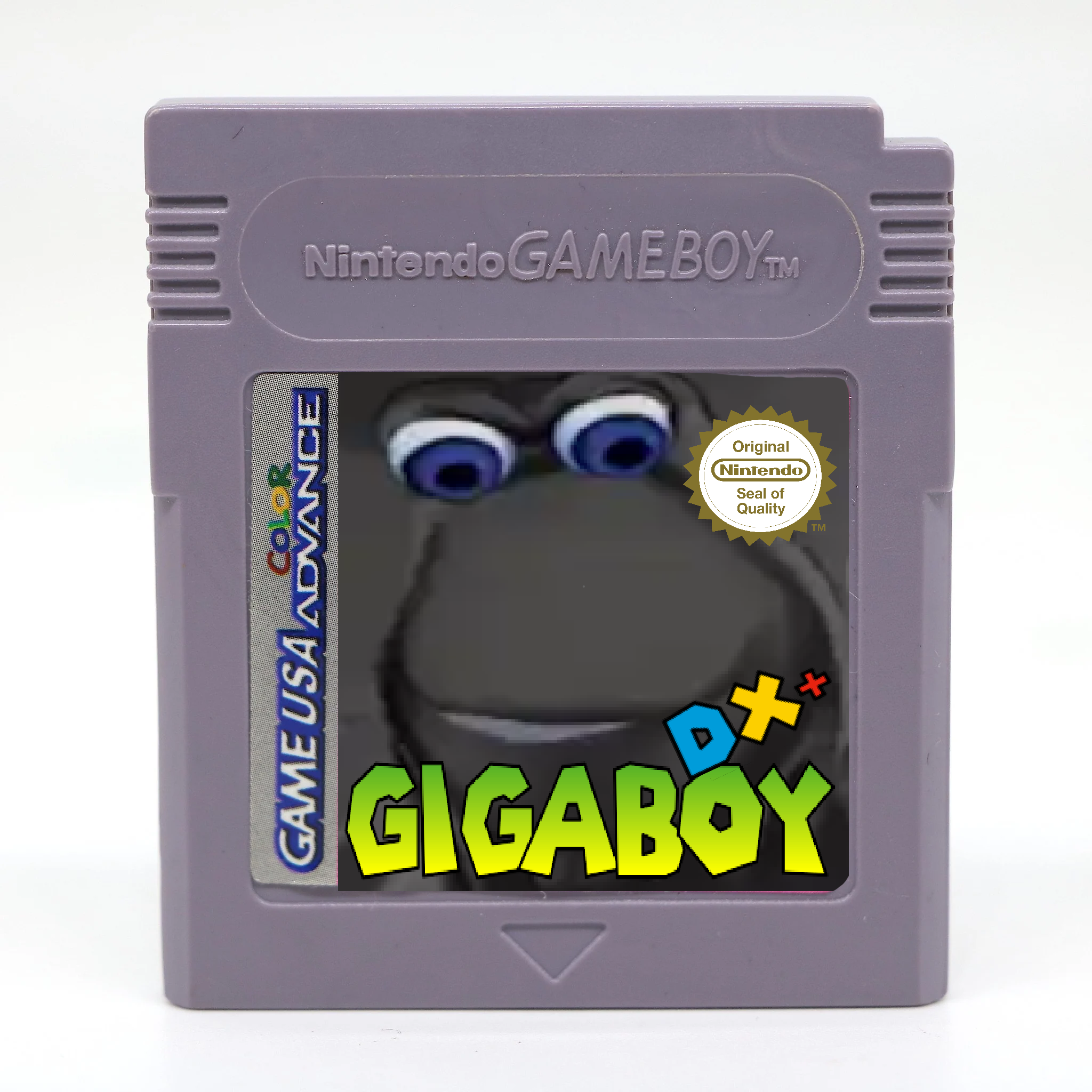
The Gigaboy DX+ for Gameboy Color
-
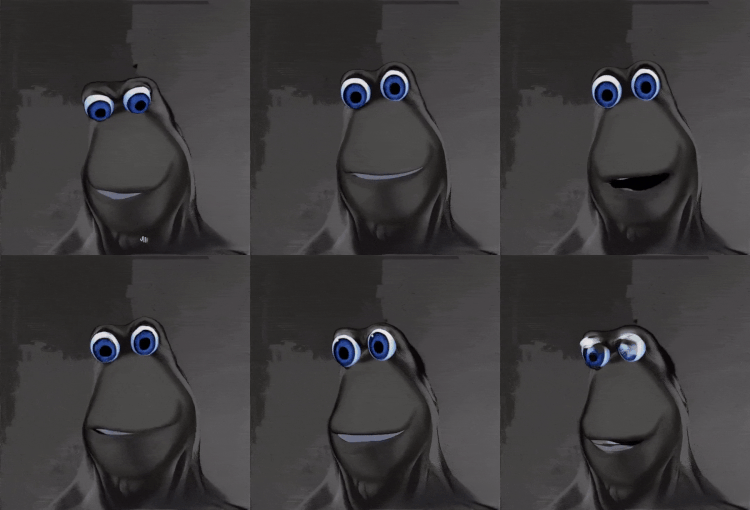
Our protagonist Gigaboy in all his glory
-
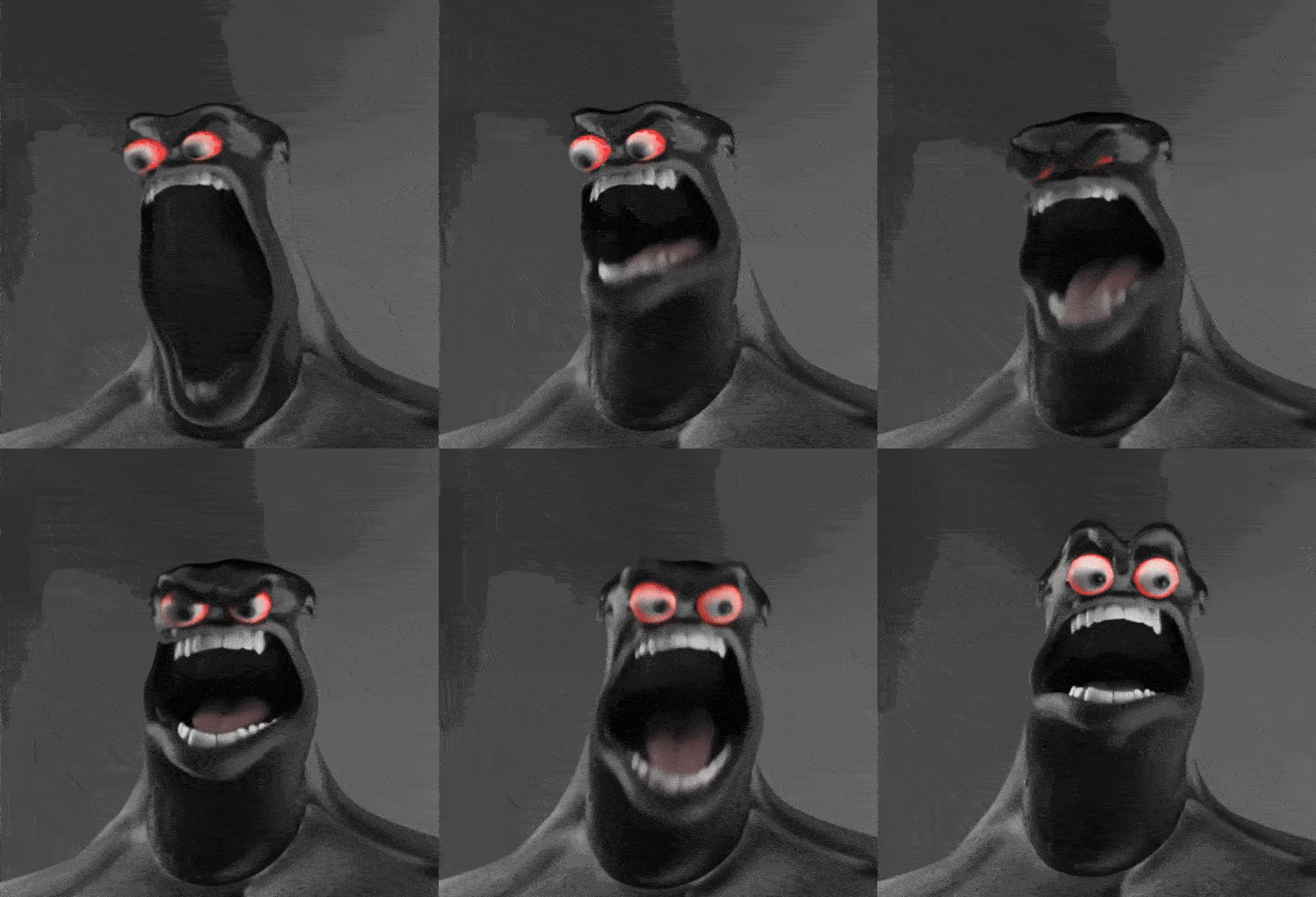
The main antagonist of the story Gigazer
-
-
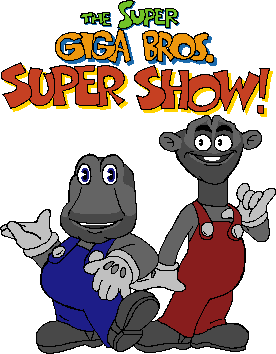
To promote Gigaboy DX on the Gameboy Color, SPiC Entertainment teamed up with Nintendo to make a Gigaboy animated series. It was adapted for television by Prof. (((L’Chaim Goldbergowitz))), animated overseas in South Korea by “1000 Gooks Animation Studio”[mostly due to budget reasons or something], voiced acted in Ontario by a bunch of literal whos and ran on syndication from 1998 to 2001 with a total of 52 episodes. Unfortunately, this show is rare just like Super Giga World and most of the episodes are lost media. So far, no episodes have been found with all film reels of it lost.


![To promote Gigaboy DX on the Gameboy Color, SPiC Entertainment teamed up with Nintendo to make a Gigaboy animated series. It was adapted for television by Prof. (((L’Chaim Goldbergowitz))), animated overseas in South Korea by “1000 Gooks Animation Studio”[mostly due to budget reasons or something], voiced acted in Ontario by a bunch of literal whos and ran on syndication from 1998 to 2001 with a total of 52 episodes. Unfortunately, this show is rare just like Super Giga World and most of the episodes are lost media. So far, no episodes have been found with all film reels of it lost.](/File:143914_-_SoyBooru.png)
Animated Series Legacy
Despite the extreme rarity of the original Gigaboy animated series the 37 surviving broadcast episodes have garnered a massive obsessive cult following among dedicated lost media archivists. The television show was truly infamous for its wildly inconsistent animation quality and strange pacing. It would often violently switch between incredibly fluid high budget sakuga style action sequences running at a full 24 frames per second and entirely static poorly drawn panning shots all within the exact same continuous scene.
Obsessive fans have dedicated entire hidden forums on the dark web exclusively to tracking down the missing 15 master tapes. Unverified rumors circulate constantly that Prof. (((L’Chaim Goldbergowitz))) still possesses the pristine master tapes securely locked inside a private climate controlled bank vault deep in the snowy mountains of Switzerland but absolutely refuses to release them to the general public until the ancient prophecy of the Great Gemmy Uprising finally occurs in the real world.
Some of the most sought after lost television episodes include the legendary Episode 14 titled The Mogging of the West. This specific episode was allegedly banned outright in 14 different European countries because it prominently featured a ten minute unbroken static sequence of Gigaboy silently staring directly into the camera judging the posture and daily caloric diet of the actual viewer at home. Another holy grail of this lost media case is Episode 33 titled Beware the Janny where Gigaboy must carefully infiltrate a damp underground dungeon ruled by a pathetic slimy creature that literally cleans the floors for absolutely zero monetary compensation. The original audio track broadcasted for this specific episode reportedly contained hidden high frequency dog whistles embedded in the mix that caused domestic household pets to become intensely aggressive towards cathode ray tube television sets. Episode 41 titled The Golden Standard is heavily discussed on archival forums because according to leaked production storyboards this episode consisted entirely of Gigaboy fiercely debating Gigazer on the intricate nuances of Austrian economics and the benefits of the global gold standard for 22 minutes straight without a single camera cut or physical blink from either character. Episode 42 known ominously as The Sneed Enigma broke the fourth wall entirely. The plot begins with Gigaboy realizing he is trapped inside a syndicated cartoon broadcast and spends the entire remaining runtime physically trying to punch his way out of the glass television screen while a low frequency drone plays loudly in the background causing mild nausea for the viewers. Finally Episode 43 titled Gigaboy Ascends is widely considered the ultimate peak of the entire series. The animation studio reportedly ran completely out of budget for this final episode so the director just filmed a live action unpaid intern dressed in a cheap soggy cardboard Gigaboy costume standing completely still in a wet empty parking lot in South Korea for twenty two unbroken minutes. Despite this drastic unannounced shift in medium it is widely considered the absolute emotional peak of the entire franchise narrative by hardcore fans. Unfortunately the show ended on a cliffhanger on Episode 52 "The Battle for the Goyslop (Part 1)" airing on December 16th 2001, with it ending on Gigazer battling Gigaboy to a goyslop feeding challenge, with die-hard fans wanting to know what the ending was gonna be.
The actual vocal voice acting cast was just as incredibly chaotic as the animation pipeline. The primary actor who originally voiced Gigaboy was a local rural Canadian lumberjack who had never formally voice acted before in his entire life. He was hired purely because his natural deep booming speaking voice caused the expensive recording studio microphones to peak out and naturally distort in a way the audio director found highly aesthetic and raw. He allegedly refused to read the provided printed script and instead just freely improvised long meandering philosophical monologues about modern forestry techniques and the industrial harvesting of pine tree sap.
The intro theme song of the television show was a booming high energy 16 bit Eurobeat track titled GIGA CHUD OVERDRIVE. It became a massive unexpected minor chart hit in certain remote Eastern European countries before being abruptly pulled from all radio station playlists by strict government authorities. This extreme action was taken due to unexplained mass nosebleeds universally reported by thousands of commuters who listened to the intense pulsating track on their morning drives to work. The music track was composed entirely by a reclusive Swedish electronic DJ who now supposedly lives entirely off the grid in a damp coastal cave. To this very day any attempt by fans to upload the full clean audio theme song to modern sound sharing video platforms is met with an immediate and highly automated copyright strike from a mysterious unregistered shell corporation currently operating out of the British Virgin Islands.