WiFi




WiFi is a collection of network protocols handling communication between computers at levels 1 (Physical) and 2 (Data Link) layers of the OSI model, based on the 802.11 standards.[1] It is loved by most soyaks for ease of use, as the connection to the medium does not require lifting an Ethernet cable and connecting it to the respective port on a device. A free WiFi access point is always present in soyboy places like expensive cafes/clubs.
Interesting coincidence, huh? IS IT? WiFi turns you into a soyboy. It melts your brain. The mind is the container for the soul given by God and the lobotomizing radiation corrupts you. This is EXACTLY why radio emission is heavily regulated. If you change the "txpower" setting on your network card have teams that detect such subtle changes and they will flag you as a dissident, and you might get visits from strange, green glowing men. Here is how to do that anyways:
$ iwconfig
This means you can transmit into the noosphere and engage in a cyber battle with the elite.[2] You will first need to hijack one of their huge 5G-transmitting antennas. Consumer grade raisin just won't cut it. Furthermore, a lot of frequencies are rulecucked by your firmware and you can only use them as long as the government is not blasting a radar somewhere nearby (like weather/military radars). Your device will either avoid those channels or flee them if it detects a radar. You can be a selfish little fuck and keep using the channel but your connection will be raped anyways.
Also, all phonefags post using WiFi. You can connect phones using a cable, but that removes the entire point of using a mobile phone to spam Terrible Mouse on /soy/, as it stops being mobile.
Your router can also be used is being used to track all of your movements.[3]
Operation
[edit | edit source]WiFi lets you connect to the internet by just navigating to the management interface of your OS and clicking a butterino. It works by transmitting a radio signal at a high frequency. The radio band is split into multiple channels so that two people can play Fortnite and post psyops on 4chan simultaneously. Another big difference from a cable is that everyone with an antenna can transmit and capture anything on the shared medium, when you would need to cut into a cable to intercept the data. The shared medium also implies that a radio frequency cannot be used to transmit more than one bit of data at a time and be received intact, otherwise a collision occurs and the network card will dismiss the information as lost.
The 802.11 traffic is structured as frames or whatever. Frames are segments with defined boundaries. The boundaries themselves are just a special pattern of bits that the network card will recognize and interpret anything after that as data, like an embedded soyjak image. The data is read until the end of the frame is detected, unless the frame is malformed. Frames also feature check sums that aid in error detection. It's like hash-banned images on the sharty, except the image is the data we want to transmit, and the fingerprint of the data is the hash in question. If the fingerprint is different, something is wrong with the payload.
This is different from the protocols AI murder drones use in Ukraine, as network collisions happen constantly on the battlefield because of the jammers, but those can't block the signal completely, so a part of it is lost but the rest of it is interpreted and you can sort of see what the camera shows and kill your brother.
There are also a few collision detection mechanisms. You may ask me: "Why have multiple, when you can detect if someone is transmitting onto the medium?". That is because, after a collision is detected, there has to be a way that we can resume transmission without bumping into each other again. There are trade-offs between speed, reliability and concurrency in the protocols or something. Like the exponential back-off one the two colliding computers both pick a random time for themselves and transmit later at that time. If they both pick the same time and collide again, they increase the possible range for the cooldown. Then there are protocols that let everyone share the medium, but that cuts the speed eight fold.
So we can transmit bits (0,1) pretty fast in different frequencies and avoid collisions. We can also detect if data has been raped, but then some random nigger could like transmit in every channel. How is this avoided? I don't know yet. Yes, I am using soyjakwiki as my personal notes.
I read about it. While nothing actually stops jeets from jamming your WiFi network, they would only slow it down and make it error out a lot, because collision detection will try its best to maintain the transmission.
The benign traffic still needs to be coordinated and split into channels n shieet. The access points are designed to share airtime if they are close enough to cause interference. However, most WiFi networks today use 5G rays, so the waves can't travel far and can be blocked by a bunker. Anyways, the uhhh the there are actually two ways the 802.11 protocols are used. You can communicate directly to another device, or through the use of an access point, like a router, to multiple. So this allows for the access point to manage multiple devices and put them into channels and actually scales well, unlike point-to-point device transmissions which would constantly brap because of collisions.
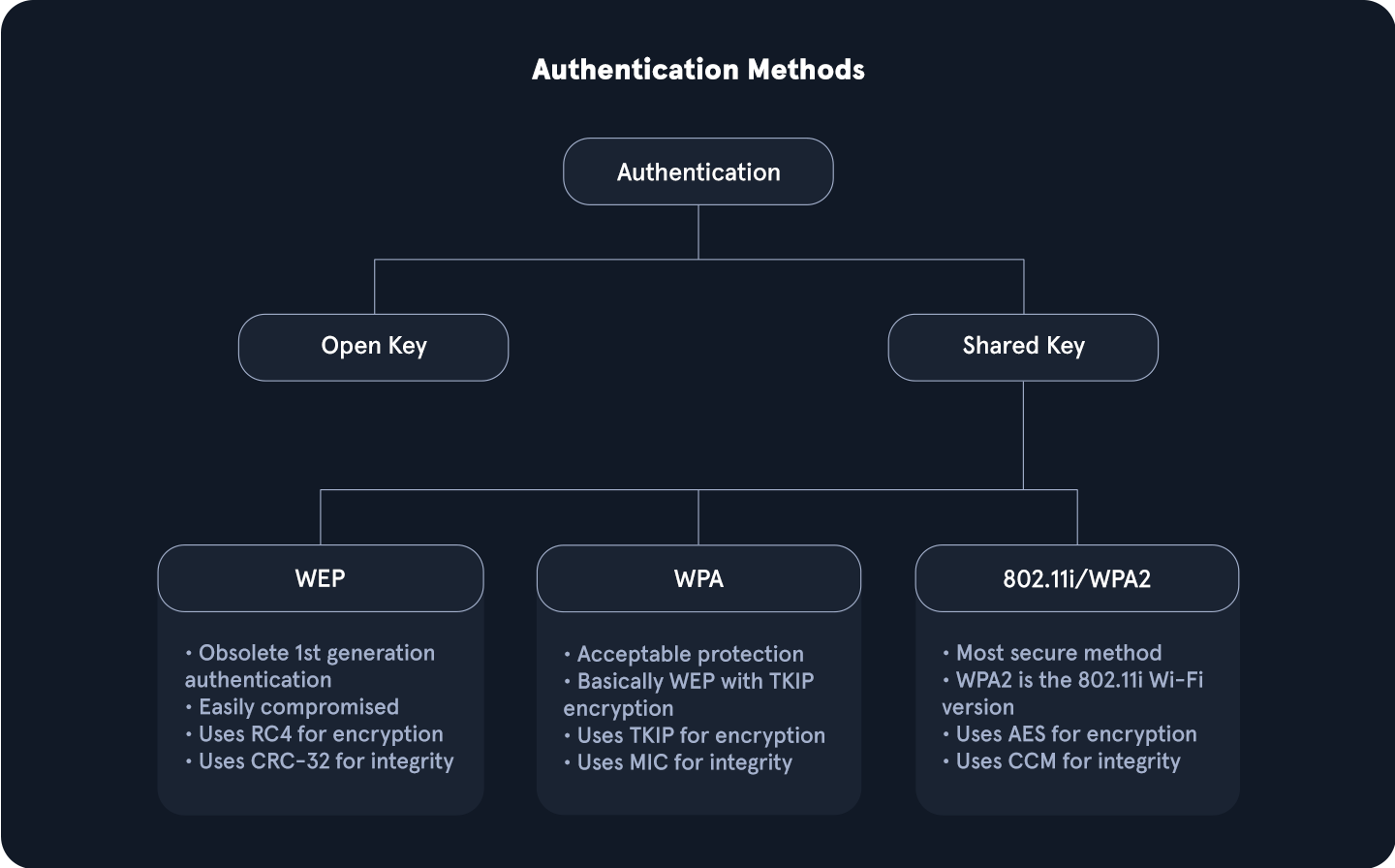
So access points allow 30 jeets in one call center to connect to 4cuck. This works by associating the device with an access point. Before association, authentication must take place. This is either done with the Open Key method or the Shared Key method. Open Key means you just send an empty request to authenticate into the network, you get a reppey and you're done. You can now send an association request. If successful, you get an association reppey and you connect to the access point.
Shared Key authentication doesn't imply the use of a single protocol in WiFi:

Snopes
- ↑ https://en.wikipedia.org/wiki/Wi-Fi
- ↑ Some of it was revealed to me in a dream.
- ↑ https://www.kaspersky.com/blog/wifi-sensing-motion-detection-howto/53851/
Computing | ||
|---|---|---|
| /languages | ||
| /software |
| |
| /cyb | ||
| /misc | ||
| /ai |
| |
>Your Sora 2 generation violates the ToS. | ||